
Hexagram Study
Hexagram 39 (Obstruction) in Study: I Ching Guidance for Learning and Growth
What does Hexagram 39 (Obstruction) teach about study and learning? The southwest is the region of retreat, the northeast that of advance. Here an individual is confronted by obstacles
Hexagram 39 (Obstruction) in Study: I Ching Guidance for Learning and Growth
You’ve been staring at the same paragraph for twenty minutes. The concept you need to master feels like a wall—dense, immovable, and entirely indifferent to your effort. Every time you try to push through, you find yourself more tangled, more frustrated, and further from understanding. The deadline looms, and the only thing growing is your sense of inadequacy. If this scenario sounds painfully familiar, you are not alone—and you are not failing. You are standing at the threshold of Hexagram 39, the ancient Chinese archetype called Obstruction.
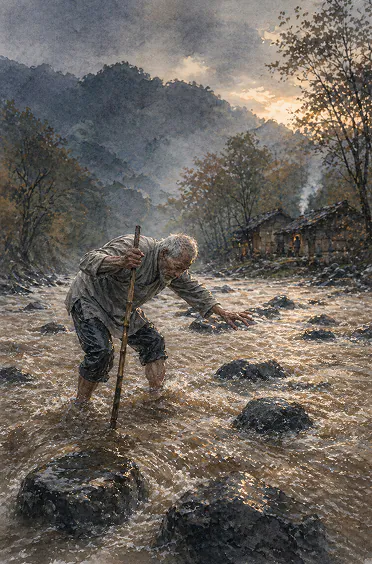
In the I Ching, Hexagram 39 is composed of Water above and Mountain below—the image of perilous waters gathering against an unyielding peak. The Judgment speaks directly to the learning experience: “The southwest is the region of retreat, the northeast that of advance.” This is not a prediction of doom, but a map of wise conduct. When obstacles block your path to mastery, the classical wisdom advises a strategic pause—not surrender, but preparation. The Mountain below represents the solid ground of your existing knowledge; the Water above symbolizes the new, challenging material that must find its way around and through that terrain. Understanding this pattern can transform your relationship with difficulty, turning frustration into a structured approach for growth.
Where This Guide Is Most Useful
• You are studying a subject that requires deep conceptual understanding, and you keep hitting a mental block that no amount of repetition seems to dissolve.
• You are preparing for an important examination or certification, and the volume or complexity of material feels overwhelming to the point of paralysis.
• You are learning a skill that demands both theory and practice—such as a language, musical instrument, or programming language—and you have plateaued after initial progress.
Understanding Obstruction in Learning & Study Context
The Judgment of Hexagram 39 makes a crucial distinction: retreat is not defeat, it is repositioning. In study, this means recognizing when direct assault on a difficult topic is counterproductive. The trigram structure—Water (danger, the unknown) over Mountain (stillness, accumulated knowledge)—paints a picture of a learner who has solid foundations but now faces material that requires a different approach. The Water cannot simply crash through the Mountain; it must flow around, seep through cracks, and eventually find a path.
The Image commentary deepens this insight: “Difficulties and obstructions throw a man back upon himself. While the inferior man seeks to put the blame on other persons, bewailing his fate, the superior man seeks the error within himself.” Applied to learning, this is a powerful corrective. When you cannot grasp a concept, the instinct is often to blame the textbook, the teacher, or your own intelligence. The I Ching invites you instead to examine your method. Are you trying to force understanding through sheer repetition? Are you skipping foundational knowledge? Are you studying in a state of anxiety that closes your mind? The obstruction becomes “an occasion for inner enrichment and education” precisely because it forces honest self-assessment.
The Judgment also emphasizes the social dimension of overcoming obstruction: “One must join forces with friends of like mind and put himself under the leadership of a man equal to the situation.” In modern learning terms, this means seeking a study group, a tutor, or a mentor. The classical text recognizes that some obstacles cannot be overcome alone. The “great man” here is not a guru but a more experienced peer or teacher who can show you the path around the mountain. This is not weakness; it is the wisdom of recognizing when your individual effort needs reinforcement.
Takeaway: Obstruction in study is not a sign of stupidity—it is a signal that your current method needs adjustment. The Mountain of your existing knowledge is solid; the Water of new material must find a different route.
How Obstruction Shows Up in Real Learning & Study Situations
Consider the experience of learning a complex mathematical proof. You read the first line, understand it. The second line follows logically. Then the third line introduces a transformation that seems to come from nowhere. You reread. You trace the steps. Nothing clicks. The more you push, the more your mind tenses, and the less you retain. This is the classic pattern of Hexagram 39: the learner is trying to advance directly (northeast) when the situation calls for retreat (southwest). The “retreat” here means stepping back to a simpler version of the problem, reviewing prerequisite material, or approaching the concept from a different angle—perhaps through a visual representation or a real-world analogy.
Another common manifestation is the “plateau” in skill acquisition. You have been practicing a language for months. You can hold basic conversations, but you cannot follow native speakers at natural speed. You practice harder, but improvement stalls. The I Ching would say that you are on the Mountain—you have solid ground—but the Water of fluency requires a different strategy. Direct force (more of the same practice) will not work. Instead, you might need to retreat into listening comprehension exercises, or immerse yourself in content slightly above your level, or find a conversation partner who can guide you through the gap.
A third scenario involves the learner who is isolated. Studying for a competitive exam alone, without feedback or community, often generates obstructions that are purely psychological. The mind begins to doubt itself, creating a loop of anxiety and avoidance. The Judgment’s call to “join forces with friends of like mind” directly addresses this. A study group can break the deadlock not by providing answers, but by showing you that others face the same difficulties and by offering multiple perspectives on the same problem.
Takeaway: Obstruction manifests as mental blocks, plateaus, and isolation. Each requires a different kind of retreat—strategic, methodological, or social—before renewed advance.
From Reading to Action: Applying Obstruction
The wisdom of Hexagram 39 is practical, not mystical. It offers a sequence of steps grounded in the moving lines. When you encounter an obstruction in your studies, begin with the counsel of Line 1: “When one encounters an obstruction, the important thing is to reflect on how best to deal with it.” Do not charge ahead. Pause. Ask yourself: What is the nature of this block? Is it a missing piece of foundation, a confusing explanation, or fatigue? The line warns that “striving blindly to go ahead only leads to complications.” Take ten minutes to diagnose the problem before trying to solve it.
If the obstruction persists, consider Line 2, which describes a situation where “the path of duty leads directly to the trouble.” In study, this applies to material you must master—a required course, a certification, a skill essential to your career. Here, retreat is not an option. The line advises that you may go forward “without compunction” because duty compels you. This is permission to struggle openly, to seek help, and to accept that the process will be difficult. It is not a sign of failure to find the work hard; it is a sign that you are on the right path.
For those who are responsible for others—parents helping children with homework, team leads training new members, teachers developing curriculum—Line 3 offers specific guidance. “If he were to plunge recklessly into danger, it would be a useless act, because those entrusted to his care cannot get along by themselves.” When you are guiding others through an obstruction, do not model frantic effort. Instead, “withdraw and turn back to your own”—reassure them, simplify the task, and build their confidence before attempting the difficult material again.
Finally, Line 5 speaks to the moment when you are called to help in an emergency—a last-minute exam, a critical project. “He should not seek to evade the obstructions, no matter how dangerously they pile up before him.” But the line also promises that “the power of his spirit is strong enough to attract helpers.” In study, this means reaching out to peers, tutors, or online communities. You do not have to overcome the obstruction alone. The key is to organize that help effectively—to ask specific questions, to share what you already understand, and to co-create a path forward.
Takeaway: Apply Hexagram 39 by pausing to diagnose, accepting necessary struggle, protecting those you guide, and actively seeking collaborative help.
Practical Examples
Example 1: The Graduate Student Facing a Statistical Method
Situation: Maria is a second-year sociology graduate student. She needs to master structural equation modeling (SEM) for her dissertation. She has read the textbook chapter three times, watched two video tutorials, and still cannot explain the difference between a measurement model and a structural model. She feels stupid and is considering changing her research question.
How to read it: This is classic Hexagram 39, Line 1. Maria is trying to force direct understanding (northeast) when she needs to retreat (southwest). Her foundation in basic regression is solid (the Mountain), but SEM requires a conceptual leap she cannot make by brute force.
Next step: Maria should step back to a simpler resource—a one-page visual guide to SEM, or a conversation with a peer who already uses the method. She should not reread the same chapter; she needs a different angle. She can also join a study group for her statistics sequence, following the Judgment’s call to “join forces with friends of like mind.”
Example 2: The Professional Learning Coding for a Career Change
Situation: James is 34 and learning Python to transition into data analysis. He completed a beginner course easily, but the intermediate material—object-oriented programming, decorators, generators—has stopped him cold for three weeks. He practices every evening, but his code still breaks in ways he cannot debug. He is considering giving up.
How to read it: This aligns with Line 2. James is duty-bound to learn this material (he needs it for his career transition), so retreat is not an option. But his current method—more of the same practice—is not working. The obstruction is not a sign of incapacity but of a need for a different learning structure.
Next step: James should find a mentor or tutor (the “great man” of the Judgment). A single hour with someone who can explain decorators in terms he already understands (functions as objects, for example) may dissolve the obstruction. He should also break his study sessions into shorter, focused blocks to reduce cognitive fatigue.
Example 3: The High School Student Preparing for College Entrance Exams
Situation: Aisha is a junior preparing for the SAT. She has been studying alone for two months, using a prep book. Her math score improved initially but has now plateaued. She feels isolated and anxious, and her practice test scores are actually declining. Her parents are worried.
How to read it: This is the isolation scenario described in the Image commentary. Aisha is “bewailing her fate” (feeling stuck and blaming the test or her own ability) rather than seeking the error within her method. The plateau is an obstruction that requires social intervention.
Next step: Aisha should join a study group or find a tutor. The “retreat” here is not from studying but from studying alone. She should also review her practice test errors systematically, looking for patterns (the “introspection” the Image recommends). The obstruction becomes an occasion for her to learn how she learns best—morning vs. evening, solo vs. group, timed vs. untimed.
Takeaway: Each example shows that the wise response to obstruction is not more effort, but smarter effort: change your angle, seek help, or adjust your environment.
Common Mistakes
• Mistaking retreat for quitting. Readers often interpret the Judgment’s call to “retreat” as giving up. In Hexagram 39, retreat is a strategic repositioning—you step back to find a better path, not to abandon the journey. In study, this means taking a break, switching resources, or reviewing prerequisites, not dropping the subject.
• Blaming yourself for the obstruction. The Image commentary warns against “bewailing his fate.” Many learners internalize blocks as proof of inadequacy. The I Ching teaches that obstructions are natural and valuable for development. The error is not in having the block, but in failing to examine your method.
• Forcing progress through the wrong line. Each moving line describes a different situation. Applying Line 3’s advice (protect your dependents) when you are actually in Line 5’s position (called to help in an emergency) will lead to inaction. The key is to honestly assess your role: Are you a solo learner, a guide for others, or someone in crisis?
• Ignoring the social dimension. The Judgment explicitly says to “join forces with friends of like mind.” Many students try to overcome every obstruction alone, viewing help-seeking as weakness. Hexagram 39 teaches that isolation is often the root of the obstruction. Reaching out is not a last resort; it is the prescribed method.
Frequently Asked Questions
Does Hexagram 39 mean I should give up on this subject?
No. Obstruction describes a temporary block, not a permanent barrier. The Judgment says, “An obstruction that lasts only for a time is useful for self-development.” The hexagram advises strategic retreat, not surrender. If you feel called to give up entirely, that is a different hexagram (Hexagram 40, Deliverance, might be relevant). Here, the message is to pause, regroup, and find a new approach.
How do I know if I am in a “retreat” situation or a “push through” situation?
The Judgment distinguishes by direction: “The southwest is the region of retreat, the northeast that of advance.” In practical terms, if your current method has been tried multiple times without progress, you are likely in retreat territory. If you have not yet made a serious attempt, advance may still be appropriate. The moving lines also help: Line 2 describes a situation where duty requires you to push through; Line 1 advises reflection before action.
Can this hexagram apply to group study, or is it only for individuals?
Absolutely for groups. The Judgment emphasizes joining forces with others. In a study group, Obstruction might manifest as a topic that no one in the group understands. The wise response is not for each member to struggle alone, but to collectively retreat to simpler material, or to seek an outside expert (the “great man”). The group’s shared effort can turn the obstruction into a bonding and learning opportunity.
What if I keep encountering the same obstruction repeatedly?
This suggests that your retreat strategy is not deep enough. The Image says the superior person “seeks the error within himself.” You may be retreating to the same resources or methods that did not work before. Consider a more radical retreat: change your learning modality (from reading to video, or from theory to practice), or address an emotional block (anxiety about the topic, fear of failure). The obstruction will persist until you change your relationship to it.
Is there a time limit for how long to stay in “retreat”?
The I Ching does not prescribe a specific duration. The Judgment says to “persevere just when one apparently must do something that leads away from his goal.” The retreat should last long enough to gain a new perspective or gather resources, but not so long that you lose momentum. A good rule of thumb: retreat until you can articulate the obstruction clearly and have at least one new strategy to try. Then advance again.
Closing Reflection
Hexagram 39 offers a profound reframe for every learner who has ever felt stuck. The obstruction is not an enemy to be defeated, but a teacher that reveals the limits of your current approach. The Mountain of your knowledge is real and valuable—it is the ground you stand on. The Water of new understanding will find its way, but only if you stop trying to force it over the peak and instead look for the path around. The classical wisdom does not promise a smooth journey; it promises that the struggle itself will deepen your understanding, if you meet it with patience, self-reflection, and the courage to ask for help. When you next face a wall in your studies, remember: the obstruction is not the end of the road. It is the beginning of a more intelligent way forward.
Turn this guide into your own reading
After reading the explanation, cast with a real question. We will carry your question into the reading flow so the result can be interpreted and saved.
Sources & References
Zhouyi / I Ching primary text
The received text of the Book of Changes, including the Judgment, Image, and line statements.
The I Ching or Book of Changes, Richard Wilhelm / Cary F. Baynes
Princeton University Press translation used as a major English-language reference point for names, structure, and commentary framing.
The Sacred Books of China: The Texts of Confucianism, James Legge
Classical English reference used for comparative reading of source terminology and commentarial tradition.
The Classic of Changes, Richard John Lynn
Modern scholarly translation consulted for comparative interpretation and editorial cross-checking.
Related Hexagrams
Continue from this guide into specific hexagram study.
Related Guides
Continue with adjacent guides for more context and deeper study.