
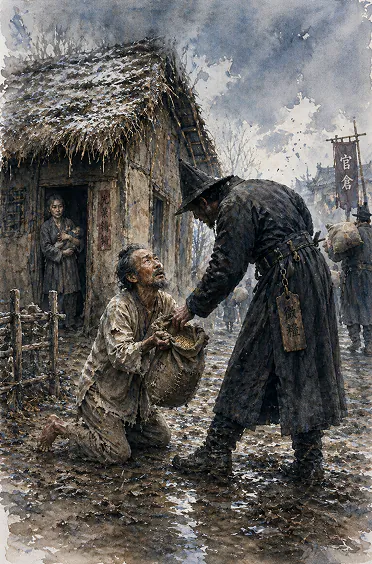
Hexagram Finance
Hexagram 41 (Decrease) in Finance: I Ching Guidance for Wealth and Money Matters
What does Hexagram 41 (Decrease) mean for finances? Decrease does not under all circumstances mean something bad. Increase and decrease come in their own time. What matters here is to understand the time and not... Discover how the I Ching guides resource management, timing of financial decisions, and the mindset behind lasting wealth.
Hexagram 41 (Decrease) in Finance: I Ching Guidance for Wealth and Money Matters
Introduction
You check your bank balance and feel a familiar knot in your stomach. The numbers are lower than you'd hoped. Perhaps you've just taken a pay cut, watched your investment portfolio shrink, or realized you need to downsize your lifestyle. The instinct is to panic, to scramble for more, to pretend everything is fine. But something in you suspects that this moment of contraction might be teaching you something important—if only you could see what it is.
This is the territory of Hexagram 41, known in the Wilhelm/Baynes tradition as Decrease. In the I Ching's sequence, Decrease follows Increase (Hexagram 42), reminding us that financial cycles of expansion and contraction are natural, not personal failures. The Judgment states plainly: "Decrease does not under all circumstances mean something bad. Increase and decrease come in their own time." The hexagram's structure—Mountain above, Lake below—shows water evaporating from the lake to nourish the mountain. Something is being given up, but something else is being enriched. The question is not whether you're losing, but what is gaining.
If you're facing a financial setback, a necessary cutback, or the uncomfortable discipline of living with less, Decrease offers a framework that is neither Pollyannaish nor defeatist. It asks you to see this moment as a pattern of change with its own timing and logic—and to conduct yourself with the inner truth that simplicity, not pretense, is what will carry you through.
Where This Guide Is Most Useful
• You are experiencing a genuine reduction in income or resources—a job loss, a business downturn, a market correction—and need to navigate it without shame or denial.
• You are choosing to decrease voluntarily—downsizing your lifestyle, paying down debt, cutting expenses—and want to do so with clarity and purpose rather than resentment.
• You are in a position where you must decrease to help others—supporting a family member, investing in a child's education, or contributing to a shared goal—and need to do so without harming your own stability.
Understanding Decrease in Finance & Wealth Context
The core insight of Hexagram 41 is that decrease is not inherently bad. This is a radical statement in a culture that equates more with better. The Judgment warns against "covering up poverty with empty pretense"—the urge to keep up appearances, to maintain the car or the house or the lifestyle that no longer fits your actual circumstances. The hexagram names this as a spiritual and practical error. When resources are scarce, simplicity becomes a source of strength, not a mark of failure.
The trigram structure deepens this teaching. Mountain (Gen) above represents stillness, restraint, the ability to stop. Lake (Dui) below represents joy, openness, and also the danger of unchecked enthusiasm. The Image says that the lake evaporates to benefit the mountain—the lower, more volatile energy is diminished so that the higher, more stable energy can be nourished. In financial terms, this means curbing the impulses that drain your resources—impulse spending, keeping up with peers, investing in things you don't understand—so that your core financial foundation becomes stronger.
The Image commentary adds a psychological dimension: "Anger must be decreased by keeping still, the instincts must be curbed by restriction. By this decrease of the lower powers of the psyche, the higher aspects of the soul are enriched." In financial practice, the lower powers include greed, fear of missing out, and the need for status. The higher aspects include patience, contentment, and the ability to make decisions based on what you actually need rather than what you're told to want.
Hexagram 41 is not asking you to enjoy poverty or to romanticize struggle. It is asking you to see decrease as a phase with its own integrity. When you accept the time of scanty resources without false cheer or false shame, you free up the energy that would otherwise go into denial. That energy can then be directed toward what the Judgment calls "inner truth"—the real values, real relationships, and real priorities that no amount of money can create or destroy.
"Even with slender means, the sentiment of the heart can be expressed." — Judgment, Hexagram 41
How Decrease Shows Up in Real Finance & Wealth Situations
The dynamics of Hexagram 41 appear in three recognizable patterns: forced decrease, chosen decrease, and decrease on behalf of others. Each has its own texture, but all share a common demand—that you stop pretending and start paying attention to what is actually true about your situation.
Forced decrease arrives without invitation. A layoff, a medical expense, a divorce settlement, a market crash. The initial response is often shock, then bargaining, then a desperate attempt to restore the old normal. But the hexagram suggests that the old normal may have been part of the problem. The Lake's unchecked gaiety—the spending habits, the lifestyle inflation, the investments made on momentum rather than analysis—needed to be restrained. The Mountain's stillness—the ability to stop, reflect, and consolidate—is what the situation now demands. When you stop fighting the decrease and start working with it, you discover that you can live on less than you thought, and that doing so clarifies what actually matters.
Chosen decrease is harder in a different way. You decide to sell the house and rent. You cut your retirement contributions to pay off credit card debt. You turn down a promotion that would require more hours and more stress. These choices feel like losses because they are losses—of status, of comfort, of the trajectory you imagined. But Hexagram 41 honors this kind of decrease as wise and strong. Line 2 speaks of serving without relinquishing oneself: "He who throws himself away in order to do the bidding of a superior diminishes his own position without thereby giving lasting benefit to the other." When you choose decrease to preserve your integrity—your health, your relationships, your sanity—you are not failing. You are practicing the highest form of financial intelligence.
Decrease on behalf of others is the most delicate pattern. You help a grown child with rent. You support an aging parent. You lend money to a friend in crisis. The Judgment says, "One must draw on the strength of the inner attitude to compensate for what is lacking in externals." This means that the value of your help is not measured in dollars alone. If you give with resentment, or give more than you can afford, you harm both yourself and the recipient. Line 1 warns that the person receiving help must "weigh carefully how much he can accept without doing the helpful servant or friend real harm." True generosity requires boundaries. You decrease your resources, but you must not decrease your own stability or dignity in the process.
"What matters here is to understand the time and not to try to cover up poverty with empty pretense." — Judgment, Hexagram 41
From Reading to Action: Applying Decrease
Moving from insight to action with Hexagram 41 requires specific, practical steps. The moving lines offer guidance for different situations, and the overall teaching is consistent: decrease is a phase to be managed with clarity, not a verdict to be endured with shame.
The first step is to take an honest inventory. The Judgment calls this "understanding the time." Look at your actual income, actual expenses, actual debt, actual savings. Not what you wish they were, not what they were last year, but what they are right now. This is the Mountain's stillness—stopping the narrative of panic or denial and simply seeing what is. Write it down. If the numbers are uncomfortable, that discomfort is the beginning of wisdom.
Next, identify what can decrease without harming your core. The Image says the lake decreases to benefit the mountain. What are the "lake" expenses in your life? Subscriptions you don't use. Meals out that have become habits. A car payment that's too high for your current income. A house that's too big for your current needs. These decreases are not punishments; they are reallocations of resources toward what actually supports you. Line 3 says, "When there are three people together, jealousy arises. One of them will have to go." In financial terms, this means that when you have too many commitments, one must be eliminated to restore clarity and balance.
If you are in a position where you must decrease to help others, apply the teaching of Line 1: "But one must reflect on how much one may decrease others." Set clear limits. Decide in advance how much you can give without endangering your own stability. Communicate those limits honestly. The person receiving your help will benefit more from your clarity than from your silent resentment.
If you are struggling with the shame of decrease, the teaching of Line 5 applies: "If someone is marked out by fate for good fortune, it comes without fail." This is not a guarantee of wealth. It is a statement that when you align with the truth of your situation—when you stop pretending and start living within your means—the universe of circumstances tends to support you. Opportunities appear. Help arrives. The pressure you feel is not a sign that you're failing; it's a sign that you're in a period of consolidation that will make future growth possible.
Finally, look for the hidden increase within the decrease. Hexagram 41 is followed by Hexagram 42, Increase. The sequence is not random. When you decrease what drains you, what remains is stronger. When you decrease pretense, what remains is real. When you decrease spending on things that don't matter, what remains is the ability to spend on things that do. Line 6 speaks of those who "dispense blessings to the whole world"—not through accumulation, but through the wise use of what they have.
"Even with slender means, the sentiment of the heart can be expressed." — This is not a consolation prize. It is the whole point.
Practical Examples
Example 1: The Job Loss That Revealed Hidden Strengths
Situation: Marcus was laid off from his marketing director role after seven years. He had a severance package that would cover three months of expenses, but his lifestyle—car lease, gym membership, daily coffee shop visits, weekend dining—was built on a salary he no longer had. His first instinct was to take the first job offer that came along, even if it meant accepting a significant pay cut and longer hours.
How to read it: This is a classic forced decrease scenario. The Judgment says, "If a time of scanty resources brings out an inner truth, one must not feel ashamed of simplicity." Marcus's "inner truth" was that he had been spending to maintain an identity that no longer served him. The decrease was not just financial; it was an invitation to examine what he actually valued.
Next step: Marcus canceled the car lease, paused the gym membership, and committed to cooking at home for 90 days. He used the freed-up time and money to take an online course in a field he'd always been curious about. Two months later, he landed a contract role that paid less than his old job but offered more flexibility and satisfaction. The decrease had clarified his priorities.
Example 2: The Chosen Downsizing That Brought Peace
Situation: Priya and her husband owned a four-bedroom house in a suburb they'd chosen for its schools. Their children were grown and gone. The house was too large, the maintenance too expensive, and the mortgage was eating into their retirement savings. They knew they should sell and downsize, but the house represented their success, their history, their identity as providers.
How to read it: This is chosen decrease, and it requires the discipline of Line 2: "A high-minded self-awareness and a consistent seriousness with no forfeit of dignity are necessary." Priya and her husband were not failing by selling the house; they were choosing to decrease their external footprint to increase their internal freedom.
Next step: They sold the house, bought a two-bedroom condo in a walkable neighborhood, and invested the difference. Their monthly expenses dropped by 40%. They used the savings to travel and to spend more time with their grandchildren. The decrease in square footage was an increase in life quality. The house was never the source of their dignity; their choices were.
Example 3: The Loan to a Friend That Required Boundaries
Situation: David's best friend, Elena, was facing eviction after a medical emergency. She asked to borrow $5,000. David had the money in his emergency fund, but lending it would leave him with only one month of expenses saved. He felt torn between his loyalty to Elena and his responsibility to himself.
How to read it: This is decrease on behalf of others, and Line 1 is explicit: "But one must reflect on how much one may decrease others." David could not help Elena by harming himself. The Judgment also says, "One must draw on the strength of the inner attitude to compensate for what is lacking in externals." David's help did not have to be purely financial.
Next step: David lent Elena $2,000—an amount that would not endanger his own stability—and spent several hours helping her apply for rental assistance and negotiate with her landlord. He made clear that the loan was a gift, not a debt, to protect their friendship from resentment. Elena received the help she needed, and David preserved his own financial foundation. The decrease was real but contained.
Common Mistakes
• Mistaking Decrease for a permanent condition. The hexagram is about a phase, not a destiny. Readers often assume that a time of decrease means they will never recover. The sequence tells you otherwise: Decrease is followed by Increase. The teaching is about how to conduct yourself during the decrease, not how to resign yourself to it forever.
• Using Decrease to justify self-punishment. Some readers interpret "simplicity" as "deprivation" and use the hexagram to justify extreme austerity. The Judgment does not say you should suffer. It says you should not be ashamed of simplicity. The difference is crucial. Decrease is about cutting what drains you, not punishing yourself for having needs.
• Ignoring the line about helping others. Readers often focus only on their own decrease and miss the teaching about how much they can decrease others. If you are in a position of power—a parent, a manager, a lender—you must consider whether your requests or expectations are decreasing someone else in a harmful way.
• Expecting immediate results from decrease. The hexagram is about timing. You cannot rush the process of consolidation. If you cut expenses and expect to feel wealthy immediately, you will be disappointed. The benefit of decrease is cumulative and often invisible until you look back months or years later.
Frequently Asked Questions
Does Hexagram 41 mean I will always be poor?
No. The hexagram describes a phase of decrease, not a permanent condition. The Judgment explicitly says, "Decrease does not under all circumstances mean something bad. Increase and decrease come in their own time." The teaching is about how to conduct yourself during a contraction so that you emerge stronger when the cycle turns.
How is Decrease different from poverty?
Poverty is a structural condition of chronic scarcity. Decrease is a phase of reduction within a larger cycle. The hexagram speaks to people who have enough to decrease—who can cut back, simplify, or give something up. It is not a teaching for those who have nothing left to lose. The distinction is important: Decrease assumes something is being decreased, not that nothing exists.
Can I use Decrease to justify not helping others?
No. The hexagram is clear that decrease on behalf of others is part of its teaching. But it also warns against helping in ways that harm yourself or the other person. Line 1 says, "But one must reflect on how much one may decrease others." The teaching is about wise, bounded generosity, not about selfishness.
What if I feel ashamed of my financial decrease?
Shame is exactly what the Judgment addresses: "If a time of scanty resources brings out an inner truth, one must not feel ashamed of simplicity." The hexagram names shame as a barrier to clear action. Your worth is not tied to your bank balance. The decrease is a fact, not a verdict. Let go of the pretense, and you will find the strength that comes from living in truth.
How do I know when the decrease phase is over?
The hexagram does not give a timeline, but it does give a sign: when you are no longer pretending, when you have consolidated your resources, when the simplicity feels like relief rather than deprivation, you are ready for the increase that follows. The sequence of the I Ching is not arbitrary. Hexagram 42, Increase, follows Decrease. The transition happens when you have learned what the decrease was there to teach you.
Closing Reflection
Hexagram 41 is not a message of doom, nor is it a promise of future riches. It is a mirror held up to a specific kind of moment—the moment when less is required, and when less, handled with integrity, becomes more. The mountain does not resent the lake's evaporation; it receives the moisture and grows stronger. Your financial decrease, whether chosen or imposed, is asking you to become still enough to see what you actually need, honest enough to release what you don't, and wise enough to know the difference. The Lake's joy does not disappear when it diminishes; it simply takes a different form. So too with your wealth, your identity, and your life. The decrease is real. But so is the strength it builds—if you let it.
Turn this guide into your own reading
After reading the explanation, cast with a real question. We will carry your question into the reading flow so the result can be interpreted and saved.
Sources & References
Zhouyi / I Ching primary text
The received text of the Book of Changes, including the Judgment, Image, and line statements.
The I Ching or Book of Changes, Richard Wilhelm / Cary F. Baynes
Princeton University Press translation used as a major English-language reference point for names, structure, and commentary framing.
The Sacred Books of China: The Texts of Confucianism, James Legge
Classical English reference used for comparative reading of source terminology and commentarial tradition.
The Classic of Changes, Richard John Lynn
Modern scholarly translation consulted for comparative interpretation and editorial cross-checking.
Related Hexagrams
Continue from this guide into specific hexagram study.
Related Guides
Continue with adjacent guides for more context and deeper study.