
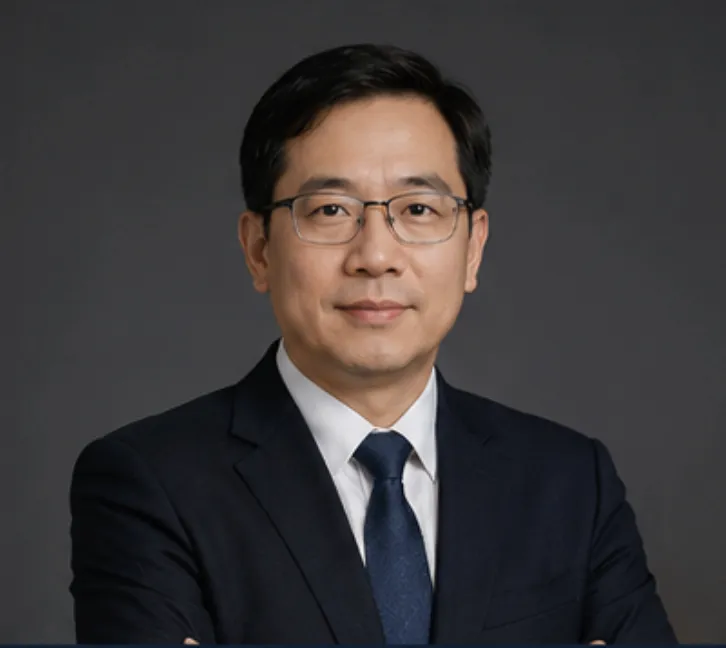
Huang Junjie
執筆者紹介

Huang Junjie

Professor of Philosophy, National Taiwan UniversityNational Taiwan University

Huang Junjie is a Professor of Philosophy at National Taiwan University and Team Lead at the International I Ching Research Center. His work bridges pre-Qin Confucian philosophy with comparative Yijing studies, examining how the Zhouyi shaped Confucian ethical thought and practical wisdom.

4

研究分野

20+ 年

経験年数

学術経歴

Huang Junjie is a Professor of Philosophy at National Taiwan University and the Team Lead of the International I Ching Research Center. He earned his Ph.D. in Philosophy from University of Tokyo, where his research centered on pre-Qin Confucian philosophy and its deep entanglement with the Zhouyi tradition.

Professor Huang's scholarship examines how the I Ching served as both a cosmological framework and a practical guide for ethical cultivation in early Confucianism. His monograph Pre-Qin Confucianism and Yijing Studies explores the formative influence of hexagram thinking on core Confucian concepts such as timeliness, propriety, and the cultivated self. He has published over twenty articles in leading Chinese philosophy journals.

As Team Lead, Professor Huang oversees the daily research operations of the I Ching Wisdom editorial team, coordinates international academic exchanges, and ensures that the platform's approach to practical hexagram interpretation remains grounded in rigorous scholarship. His writing for I Ching Wisdom focuses on making comparative philosophical insights accessible to a global readership.

“Huang Junjie is a Professor of Philosophy at National Taiwan University and Team Lead at the International I Ching Research Center. His work bridges pre-Qin Confucian philosophy with comparative…”

研究分野

Pre-Qin Confucian philosophyComparative Yijing studiesConfucian ethics and hexagram wisdomCross-cultural philosophical dialogue

学歴

05

Ph.D. · Chinese Philosophy

University of Tokyo

00

M.A. · Chinese Philosophy

University of Tokyo

97

B.A. · Philosophy

University of Tokyo

専門分野

Comparative Yijing studies and cross-cultural interpretation
Practical application of hexagram wisdom to modern ethical questions
Confucian philosophy and its intersection with the Book of Changes

編集方針

Connecting hexagram insights to everyday decision-making and ethical reflection
Drawing parallels between Eastern and Western philosophical traditions
Making classical Confucian thought accessible to contemporary readers

執筆記事

Comparison Guides2026年5月5日

I Ching vs Astrology: Comparing Two Ancient Systems of Guidance

How does the I Ching compare to astrology? This guide explores the differences in method, philosophy, and practical use between these two ancient systems of insight and guidance.

Comparison Guides2026年5月5日

I Ching as Meditation: How the Book of Changes Complements Contemplative Practice

Discover how the I Ching works as a meditation tool. This guide explores the relationship between hexagram contemplation and mindfulness, and how the Book of Changes supports inner stillness.

Comparison Guides2026年5月5日

Decrease (Sun) vs Increase (Yi): The I Ching on Loss and Gain

Hexagram 41 (Decrease) and Hexagram 42 (Increase) address the universal rhythms of loss and gain. Learn what each teaches about timing, proportion, and the wisdom of letting go.

Hexagram Career2026年5月5日

Hexagram 1 (The Creative) in Career: I Ching Guidance for Work and Professional Life

What does Hexagram 1 (The Creative) mean for your career? According to the original meaning, the attributes sublimity, potentiality of success, power to further, perseverance] are paired. When an individual draws this... Learn how the I Ching guides professional decisions, leadership, timing, and workplace dynamics.

Hexagram Love2026年5月5日

Hexagram 11 (Peace) in Love: I Ching Guidance for Relationships

What does Hexagram 11 (Peace) reveal about love and relationships? This hexagram denotes a time in nature when heaven seems to be on earth. Heaven has placed itself beneath the earth, and so their powers unite in deep harmony.... Explore how the I Ching guides emotional connection, dating, and partnership dynamics.

Hexagram Career2026年5月5日

Hexagram 15 (Modesty) in Career: I Ching Guidance for Work and Professional Life

What does Hexagram 15 (Modesty) mean for your career? It is the law of heaven to make fullness empty and to make full what is modest; when the sun is at its zenith, it must, according to the law of heaven, turn tow... Learn how the I Ching guides professional decisions, leadership, timing, and workplace dynamics.