
Hexagram Career
Hexagram 6 (Conflict) in Career: I Ching Guidance for Work and Professional Life
What does Hexagram 6 (Conflict) mean for your career? Conflict develops when one feels himself to be in the right and runs into opposition. If one is not convinced of being in the right, opposition leads to craftin... Learn how the I Ching guides professional decisions, leadership, timing, and workplace dynamics.
Hexagram 6 (Conflict) in Career: I Ching Guidance for Work and Professional Life
You've been passed over for a promotion you deserved. A colleague took credit for your idea. Your boss keeps assigning you work that falls outside your job description, and every time you try to raise the issue, you're told to "be a team player." The injustice burns, and part of you wants to fight—to send that email, schedule that meeting, make your case once and for all. But another part of you hesitates, sensing that open conflict might damage relationships you can't afford to lose.
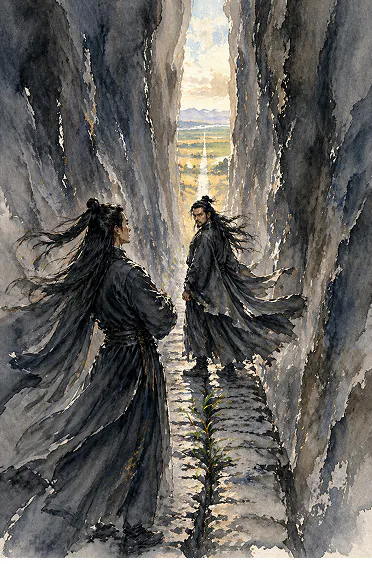
This is the territory of Hexagram 6: Conflict—one of the most misunderstood and practically valuable patterns in the I Ching. Its judgment opens with a stark recognition: "Conflict develops when one feels himself to be in the right and runs into opposition." The hexagram's structure—Heaven (creative strength) above, Water (danger and depth) below—describes a situation where powerful opposing forces are pulling in different directions. The upper trigram of Heaven represents your conviction, your sense of what is correct and just. The lower trigram of Water represents the treacherous, unpredictable currents of the situation itself. When these two forces meet, conflict is not a character flaw or a failure of communication—it is an inevitable pattern that arises when strong principles encounter real opposition.
If you are currently entangled in a workplace conflict, or if you sense one brewing beneath the surface, this guide will help you see the pattern clearly. The I Ching does not promise easy resolutions. Instead, it offers something far more valuable: a framework for understanding when to engage, when to withdraw, and how to conduct yourself so that the conflict does not permanently damage your career or your character.
Where This Guide Is Most Useful
• You are in an active workplace dispute—with a colleague, a supervisor, or a team—and you need clarity on whether to escalate, compromise, or disengage.
• You feel you have been wronged professionally and are weighing whether to pursue the matter formally through HR, legal channels, or higher management.
• You sense a conflict developing but it has not yet become overt, and you want to handle the situation wisely before positions harden.
Understanding Conflict in Career & Work Context
The judgment of Hexagram 6 is remarkably precise about the inner condition that leads to conflict. It states that conflict arises when a person "feels himself to be in the right." This is not the same as actually being in the right—it is the subjective experience of conviction. In a career context, this feeling often emerges when your professional identity, your sense of fair treatment, or your understanding of your role is challenged. The strength of Heaven trigram represents this conviction, but the danger of Water trigram reminds us that conviction alone does not guarantee a good outcome.
The Image commentary deepens this insight: "The causes of conflict are latent in the opposing tendencies of the two trigrams. Once these opposing tendencies appear, conflict is inevitable." This is a sobering statement. It means that some conflicts cannot be avoided by better communication, more empathy, or compromise. When the fundamental direction of two parties is opposed—when one person wants to move the team in one direction and another is equally committed to a different path—the clash is structural, not personal. Recognizing this can be liberating. It removes the burden of thinking you could have prevented the conflict if only you had handled things differently.
At the same time, the judgment offers a crucial distinction: "If one is not convinced of being in the right, opposition leads to craftiness or high-handed encroachment but not to open conflict." This describes the shadow side of workplace conflict—the passive-aggressive emails, the subtle undermining, the quiet withholding of information. These behaviors are conflict in disguise, and they are often more damaging than open confrontation because they cannot be addressed directly. The I Ching's teaching here is that if you are entangled in such a situation, you must first become clear about your own position. Are you truly convinced you are in the right, or are you acting from wounded pride, fear, or a sense of scarcity?
The first task in any workplace conflict is not to win—it is to become clear about whether you are truly in the right, and whether the fight is worth the cost.
How Conflict Shows Up in Real Career & Work Situations
In professional settings, Conflict rarely announces itself as a clean, straightforward disagreement. More often, it manifests as a slow escalation of tension that follows a recognizable pattern. It begins with a small boundary violation—perhaps a colleague speaks over you in a meeting, or a manager assigns you work without consulting you. If this violation is left unaddressed, it creates a residue of resentment. The next time something similar happens, your reaction is stronger. The other party, sensing your resistance, may respond defensively. And so the cycle continues until a full-blown conflict erupts over what seems, to outsiders, like a trivial matter.
This is why the Image commentary emphasizes prevention: "If rights and duties are exactly defined, or if, in a group, the spiritual trends of the individuals harmonize, the cause of conflict is removed in advance." In modern workplace terms, this means having clear job descriptions, explicit agreements about decision-making authority, and honest conversations about values and working styles before problems arise. Many conflicts that devastate careers could have been prevented by a single thirty-minute conversation at the outset of a project or a working relationship.
Another common pattern involves the "great man" mentioned in the judgment—an impartial authority figure who can terminate the conflict amicably or assure a just decision. In a corporate context, this might be a senior leader, an HR professional, a mediator, or even a trusted mentor who has no stake in the outcome. The judgment advises that it is "important to see the great man," suggesting that you should actively seek such a person rather than trying to resolve the conflict entirely on your own terms. This is counterintuitive for many professionals who pride themselves on handling their own problems. But the I Ching recognizes that when two parties are locked in conflict, neither can see the situation clearly. An outside perspective is not a sign of weakness—it is a strategic necessity.
The judgment also warns against "crossing the great water" during times of strife—that is, beginning new, dangerous enterprises when you are already in conflict. In career terms, this means avoiding major professional risks while you are embroiled in a dispute. Do not change jobs impulsively, launch a high-stakes project, or make a dramatic public stand while the conflict is unresolved. The reason is simple: "Conflict within weakens the power to conquer danger without." Your energy is already divided. Any external challenge will find you at less than full strength.
The most dangerous moment in a workplace conflict is when you feel compelled to prove you are right at any cost. That is precisely when the cost becomes highest.
From Reading to Action: Applying Conflict
The six lines of Hexagram 6 offer a detailed map of how conflict unfolds and how to navigate each stage. The first line describes a conflict in its incipient stage: "While a conflict is in the incipient stage, the best thing to do is to drop the issue. Especially when the adversary is stronger, it is not advisable to risk pushing the conflict to a decision." This is difficult advice for anyone who values justice and directness. But the line recognizes that when the balance of power is against you, engaging in open conflict at the earliest stage may lead to a decisive defeat. The wise course is to let the small matter go, preserving your energy and reputation for battles where the odds are more favorable.
The second line goes further: "In a struggle with an enemy of superior strength, retreat is no disgrace." This line speaks directly to the professional who is outranked, outnumbered, or outmaneuvered. The I Ching's counsel is clear: withdraw. This is not cowardice—it is strategic discernment. The line adds that "timely withdrawal prevents bad consequences" and that a wise, conciliatory attitude "benefits the whole community." When you choose not to fight an unwinnable battle, you protect not only yourself but also your colleagues who might otherwise be drawn into the conflict.
The third line offers a warning about the dangers of an expansive disposition: "Only that which has been honestly acquired through merit remains a permanent possession." In career terms, this speaks to the difference between what you have genuinely earned and what you have taken or been given without true merit. If your position, reputation, or accomplishments are solidly grounded in real work, they cannot be taken from you by conflict. But if you have been coasting on appearances or political connections, conflict will expose the weakness. The line also advises: "If one enters the service of a superior, one can avoid conflict only by not seeking works for the sake of prestige. It is enough if the work is done: let the honor go to the other." This is a radical teaching for ambitious professionals. It suggests that the most effective way to avoid destructive conflict is to release your attachment to recognition.
The fourth line describes someone who initially wants to fight but then turns back: "In contrast to the situation of the nine in the second place, he is dealing with a weaker opponent and might therefore succeed. But he cannot carry on the fight, because, since right is not on his side, he cannot justify the conflict to his conscience." This is a profound moment of moral clarity. You may have the power to win, but if you know you are in the wrong, victory will bring no peace. The line says that accepting your fate and finding peace in alignment with eternal law "brings good fortune." In practical terms, this means honestly assessing whether your position is truly just—and if it is not, letting go even if you could prevail.
The fifth line describes the arbiter: "This refers to an arbiter in a conflict who is powerful and just, and strong enough to lend weight to the right side. A dispute can be turned over to him with confidence." If you are in a position of authority mediating a dispute, this line affirms the importance of being both powerful and just. If you are seeking resolution, it tells you to find someone who embodies both qualities. The line promises that "if one is in the right, one attains great good fortune."
The sixth and final line is a cautionary tale: "Here we have someone who has carried a conflict to the bitter end and has triumphed. He is granted a decoration, but his happiness does not last." This is the person who wins the battle but loses the war. He may get the promotion, the apology, or the settlement, but the enmity persists. He is "attacked again and again," and the result is "conflict without end." This line is the ultimate warning against the temptation to win at all costs. The victory is hollow because the relationship is destroyed.
The goal is not to win the conflict. The goal is to end it—cleanly, fairly, and finally—so that you can return to the work that matters.
Practical Examples
Example 1: The Credit Thief
Situation: You present a detailed analysis in a team meeting. A senior colleague later presents the same analysis to the director, framing it as their own work. You feel furious and humiliated. Your instinct is to confront the colleague publicly or send an email to the director correcting the record.
How to read it through Hexagram 6: This is a conflict in its incipient stage (first line). The colleague has superior organizational power and a closer relationship with the director. Open confrontation would likely backfire, making you look petty and the colleague defensive. The judgment advises seeing the "great man"—in this case, perhaps a neutral third party like a mentor or a different senior leader who can address the issue indirectly. More importantly, the first line advises dropping the issue for now. Your work is genuine; it cannot be permanently stolen. Focus on documenting your contributions going forward and building direct relationships with decision-makers.
Next step: Schedule a one-on-one with the colleague. Do not accuse. Instead, say: "I noticed you presented some of the analysis I developed in our meeting. Going forward, I'd appreciate it if we could coordinate on who presents what, so our contributions are clear to the team." This addresses the behavior without declaring war. If the colleague responds poorly, escalate to a trusted mentor for advice rather than confronting directly.
Example 2: The Unequal Conflict
Situation: Your new manager systematically undermines your authority with your team. She countermands your decisions, assigns your direct reports tasks without consulting you, and criticizes your work in group settings. You are her subordinate and have no allies in senior leadership. You want to file a formal complaint with HR.
How to read it through Hexagram 6: This is the situation of the second line: "In a struggle with an enemy of superior strength, retreat is no disgrace." Your manager has positional power and likely has relationships with HR and senior leaders that you do not. A formal complaint at this stage would likely result in your being labeled difficult, while she would be given the benefit of the doubt. The line advises timely withdrawal—not surrender, but strategic disengagement. Begin documenting every instance of undermining behavior, but do not use the documentation yet. Simultaneously, invest in building relationships with other leaders and exploring internal transfers. Your exit from this manager's orbit is your victory.
Next step: Stop fighting the small battles. Let the manager countermand a decision without protest. Begin a quiet job search within the company. Schedule informational interviews with leaders in other departments. Build your network while keeping your head down. When you have a solid offer to transfer, then—and only then—consider whether to raise the issue with HR as part of your exit.
Example 3: The Hollow Victory
Situation: You have been in a six-month dispute with a peer over ownership of a major project. You have finally won: your manager has ruled in your favor, and the peer has been reassigned. But the victory feels empty. The peer is spreading negative rumors about you, and team morale has suffered. You are now seen as difficult to work with.
How to read it through Hexagram 6: This is the sixth line: "He is granted a decoration, but his happiness does not last." You have carried the conflict to its bitter end and triumphed, but the cost has been enormous. The enmity is perpetuated, and you are now "attacked again and again." The judgment warned: "To carry on the conflict to the bitter end has evil effects even when one is in the right, because the enmity is then perpetuated." You were in the right, but the victory has damaged your professional reputation and relationships.
Next step: You cannot undo the conflict, but you can change how you conduct yourself going forward. Publicly acknowledge the peer's contributions to the project in its early stages. Refuse to engage in any further negative talk about them. Focus on delivering exceptional results on the project you fought for—excellence is the only thing that will restore your reputation. If the rumors continue, address them directly with your manager: "I know there has been tension between [peer] and me. I am committed to moving forward professionally and focusing on results. I would appreciate your support in keeping the focus on the work."
Common Mistakes
• Assuming that being right guarantees a good outcome. The judgment explicitly warns that carrying a conflict to the bitter end has evil effects "even when one is in the right." Rightness is necessary but not sufficient. You also need timing, strategy, and the right arbiter.
• Confusing withdrawal with weakness. The second line teaches that retreat is no disgrace when facing a stronger opponent. Many professionals damage their careers by refusing to back down from unwinnable fights out of a misguided sense of honor.
• Ignoring the incipient stage. The Image commentary emphasizes that conflict is best prevented at the very beginning, when rights and duties can still be clearly defined. Most workplace conflicts escalate because small issues are left unaddressed until they become entrenched.
• Believing that conflict resolution means everyone wins. The I Ching does not promise harmonious resolutions. Some conflicts end with one party withdrawing, others with a decisive ruling from an authority, and still others with permanent estrangement. The goal is not to make everyone happy—it is to end the conflict cleanly so that productive work can resume.
Frequently Asked Questions
Should I confront my colleague directly about a conflict?
It depends on the balance of power and the stage of the conflict. The first line advises dropping the issue when the adversary is stronger and the conflict is still incipient. The fourth line shows that if you are in the wrong, you should not fight even if you could win. Direct confrontation is most appropriate when you have a clear case, a fair arbiter, and a reasonable chance of resolution without permanent damage.
What does "seeing the great man" mean in a career context?
The "great man" is an impartial authority figure whose power and judgment are respected by both parties. This could be a senior leader, an HR professional, a mediator, or an external consultant. The judgment advises seeking such a person because when you are in conflict, you cannot see the situation clearly. A neutral third party can help you find a resolution that neither party could reach alone.
Can Hexagram 6 ever indicate that I should escalate a conflict?
Yes, but only under specific conditions. The fifth line describes a situation where the arbiter is "powerful and just, and strong enough to lend weight to the right side." If you are in the right and you have access to such an arbiter, escalation can lead to "great good fortune." The key is that the arbiter must be both powerful and just—one without the other is insufficient.
What if I am the one causing the conflict without realizing it?
The third line warns against "an expansive disposition" and the danger of seeking prestige rather than doing good work. If you find yourself in repeated conflicts, examine whether you are pushing for recognition, credit, or control beyond what you have earned. The line advises: "It is enough if the work is done: let the honor go to the other." This is a challenging teaching, but it may be exactly what you need to hear.
How do I know when a conflict is worth fighting?
The judgment provides the framework: you must be convinced you are in the right, you must be ready to meet the opponent halfway, and you must have access to a fair arbiter. If any of these conditions is absent, the conflict is unlikely to end well. Additionally, the sixth line warns that even a victorious conflict can leave you worse off. Ask yourself: what will my professional life look like after this conflict, whether I win or lose? If the answer does not include the ability to work effectively with the people involved, the conflict is probably not worth fighting.
Closing Reflection
Hexagram 6 does not promise that you will avoid conflict in your career. It promises something more useful: that you can learn to navigate conflict with clarity, integrity, and strategic wisdom. The judgment's central teaching—that carrying a conflict to the bitter end has evil effects even when you are in the right—is one of the most countercultural and valuable insights the I Ching offers to professionals. In a world that often celebrates the fighter, the one who never backs down, the I Ching quietly suggests that the wiser path is to know when to engage, when to withdraw, and when to seek the help of a fair-minded authority. Conflict is not a sign that you have failed. It is a sign that strong forces are at work. Your task is not to eliminate those forces, but to conduct yourself in such a way that you emerge from the conflict with your work intact and your character strengthened.
Turn this guide into your own reading
After reading the explanation, cast with a real question. We will carry your question into the reading flow so the result can be interpreted and saved.
Sources & References
Zhouyi / I Ching primary text
The received text of the Book of Changes, including the Judgment, Image, and line statements.
The I Ching or Book of Changes, Richard Wilhelm / Cary F. Baynes
Princeton University Press translation used as a major English-language reference point for names, structure, and commentary framing.
The Sacred Books of China: The Texts of Confucianism, James Legge
Classical English reference used for comparative reading of source terminology and commentarial tradition.
The Classic of Changes, Richard John Lynn
Modern scholarly translation consulted for comparative interpretation and editorial cross-checking.
Related Hexagrams
Continue from this guide into specific hexagram study.
Related Guides
Continue with adjacent guides for more context and deeper study.