
Hexagram Health
Hexagram 47 (Oppression) in Health: I Ching Guidance for Wellbeing and Vitality
What does Hexagram 47 (Oppression) suggest about health and wellbeing? Times of adversity are the reverse of times of success, but they can lead to success if they befall the right man. When a strong man meets with adversity, he re... Explore how the I Ching frames the balance of energy, rest, and renewal.
Hexagram 47 (Oppression) in Health: I Ching Guidance for Wellbeing and Vitality
Introduction
You wake up and the weight is already there—before your feet touch the floor, before the first thought of the day. It might be the familiar ache that hasn't lifted in months, the diagnosis that changed everything, or the slow erosion of energy that makes you wonder if you'll ever feel like yourself again. Health challenges have a way of pressing in from all sides, and when you're in the middle of them, it's hard to see anything beyond the immediate struggle. You've tried the protocols, the specialists, the supplements, the prayers. And still, the feeling of being stuck persists—as if life itself has become a narrow corridor with no exit in sight.
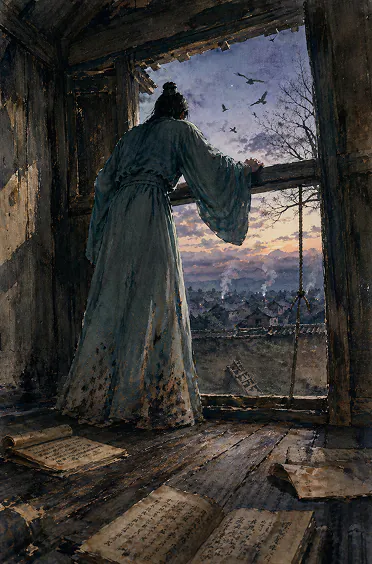
This is the territory of Hexagram 47, traditionally called Oppression (K'un in Chinese, sometimes translated as Exhaustion or Adversity). In the I Ching's sequence, Hexagram 47 follows the hexagram of Rising Up (46), suggesting that periods of ascent are often followed by constriction—a natural rhythm that many of us experience in our health journeys. The Judgment speaks directly to this: "Times of adversity are the reverse of times of success, but they can lead to success if they befall the right man." The trigram structure—Lake (Dui) above, Water (Kan) below—shows water that has drained from the lake, leaving it parched and empty. This is not a punishment or a cosmic test. It is a pattern of change, one that asks something specific of us.
If you are reading this while feeling depleted, discouraged, or genuinely oppressed by a health situation, know that this hexagram does not offer false comfort or empty promises. What it offers is something more valuable: a clear-eyed view of what is actually happening and guidance for how to conduct yourself when your vitality is under siege. Hexagram 47 is for the person who is tired of being told to "stay positive" and needs something more real.
Where This Guide Is Most Useful
• When you are in the middle of a chronic health challenge that has worn down your usual coping resources—the kind of situation where you've already tried the obvious solutions and they haven't worked, leaving you feeling both physically depleted and psychologically oppressed.
• When you are recovering from a major health event (surgery, illness, injury) and the recovery period feels like its own form of oppression—slower than expected, more isolating, and requiring a kind of patience you're not sure you possess.
• When you are caring for someone else's health and feeling the exhaustion of that role—the way caregiving can drain your own vitality while simultaneously making you feel guilty for even noticing your own depletion.
Understanding Oppression in Health & Wellbeing Context
The Judgment of Hexagram 47 makes a crucial distinction that many modern health narratives miss: "When a strong man meets with adversity, he remains cheerful despite all danger, and this cheerfulness is the source of later successes; it is that stability which is stronger than fate." This is not toxic positivity. The word "cheerfulness" here translates a Chinese term that carries the sense of inner steadiness—a quality that is not about feeling happy but about remaining fundamentally intact when everything around you is pressing in. The Image reinforces this: "When the water has flowed out below, the lake must dry up and become exhausted. That is fate. In such times there is nothing a man can do but acquiesce in his fate and remain true to himself."
Let's be precise about what this means in a health context. The lower trigram, Water (Kan), represents the danger and depth of the health challenge itself—the way illness or depletion can feel like drowning, like being pulled into currents you cannot control. The upper trigram, Lake (Dui), represents the joyful openness that should naturally be available to you—the vitality, the social connection, the sense of being replenished. In Oppression, the water has left the lake. The vitality has drained away. This is not a metaphor for "you're doing something wrong." It's a description of a real phase that many health journeys pass through.
What makes Hexagram 47 so valuable for wellbeing is its refusal to moralize about suffering. The text does not say that adversity is a lesson you need to learn, or a test you need to pass, or a shadow you need to transform. It says something far more practical: that in times of genuine oppression, the most important thing you can do is preserve your inner core. The Judgment continues: "He who lets his spirit be broken by exhaustion certainly has no success. But if adversity only bends a man, it creates in him a power to react that is bound in time to manifest itself." This is not about winning or losing. It's about not being broken. In health terms, this means protecting your fundamental sense of self even when your body is failing you, even when the treatments are grueling, even when the prognosis is uncertain.
The line that many readers miss is this one: "Therefore in times of adversity it is important to be strong within and sparing of words." Sparing of words. This is a critical insight for anyone navigating a health crisis. The impulse to explain, to justify, to seek understanding from others—these are natural, but in times of deep oppression, they often drain more energy than they return. The hexagram suggests a different strategy: conserve your speech, protect your inner resources, and let your strength be something you feel rather than something you demonstrate.
The Takeaway: Oppression in health is not a sign that you are failing. It is a phase of the natural cycle where vitality has temporarily drained away. Your task is not to force the water back into the lake, but to remain intact until the conditions for replenishment naturally return.
How Oppression Shows Up in Real Health & Wellbeing Situations
The first way Oppression manifests in health is through the experience of exhaustion that no amount of rest seems to touch. This is different from ordinary tiredness. Ordinary tiredness responds to sleep, to a good meal, to a day off. The kind of exhaustion described by Hexagram 47 feels existential—it's a depletion that reaches into the marrow, a weariness that sleep doesn't cure and that makes even small decisions feel overwhelming. The lower trigram, Water, here represents the depth of this exhaustion. You are not just tired; you are drained at a level that feels like your very life force has been pulled away. People in this state often describe feeling "empty" or "hollow," and they may be told by well-meaning others to "just rest more" or "try meditation." But the Oppression pattern is different: the water has left the lake, and no amount of willing it back will work until the underlying conditions shift.
A second recognizable pattern is the experience of being trapped between conflicting health advice or treatment approaches. This is the person who has seen three specialists and gotten three different opinions. The rheumatologist says one thing, the functional medicine doctor says another, and the well-meaning friend who "cured herself naturally" offers a third path. Each approach has some merit, each requires significant investment of time and energy, and none has delivered clear results. The person feels oppressed not just by the illness but by the burden of decision-making itself. Hexagram 47 speaks to this in Line 2: "One is exhausted by the commonplaces of life, and there seems to be no way of escape." The "commonplaces" here are the endless rounds of appointments, the conflicting recommendations, the constant need to make choices when you have no energy left for choosing.
A third manifestation is the social oppression that comes with chronic or serious illness. When you are in a health crisis, the world does not stop. Friends continue with their lives. Work demands continue. Family members have their own needs. And you find yourself in the strange position of being both overwhelmed and invisible—your suffering is real and consuming, but it doesn't register in the lives of others the way it registers in yours. The Judgment's final phrase—"his words have no effect"—captures this perfectly. You try to explain what you're going through, and people nod sympathetically, but they don't really understand. Your words fall into a void. This is one of the most painful aspects of health-related Oppression: the isolation that comes from being unable to truly communicate the depth of your experience.
The Takeaway: Oppression in health is not one thing. It shows up as existential exhaustion, as the burden of impossible choices, and as the isolating experience of suffering that others cannot fully see. Recognizing which pattern you are in is the first step toward responding appropriately.
From Reading to Action: Applying Oppression
The practical wisdom of Hexagram 47 lies in its moving lines, each of which describes a different way of responding to oppression—and warns against common mistakes. Let's walk through the most relevant lines for health and wellbeing situations.
Line 1 describes the danger of being overwhelmed by adversity: "When adversity befalls a man, it is important above all things for him to be strong and to overcome the trouble inwardly. If he is weak, the trouble overwhelms him. Instead of proceeding on his way, he remains sitting under a bare tree and falls ever more deeply into gloom and melancholy." This is the line for the person who has given up—not in a dramatic, "I'm quitting" way, but in the quieter way of simply stopping. You stop reaching out. You stop trying new approaches. You stop hoping. The "bare tree" is a powerful image: it offers no shade, no fruit, no comfort, yet you stay there because moving seems impossible. The line's advice is to recognize this as delusion ("This attitude comes from an inner delusion that he must by all means overcome") and to find the strength to move, even a little. In health terms, this might mean doing one small thing today that you haven't done in weeks—calling a friend, taking a short walk, making an appointment you've been avoiding. The movement itself is the medicine.
Line 2 offers a more hopeful image: "Externally, all is well, one has meat and drink. But one is exhausted by the commonplaces of life, and there seems to be no way of escape. Then help comes from a high place." This line describes the person who has material resources and support but is still oppressed—by the routine, the bureaucracy, the endless small demands of managing a health condition. The "high place" from which help comes can be interpreted as a new perspective, a specialist who finally understands, or an unexpected resource. But the line warns: "To set forth without being prepared would be disastrous." In practical terms, this means that when an opportunity for help appears—a new treatment, a referral, a support group—you must prepare yourself before acting. This might mean gathering your medical records, writing down your questions, or simply resting enough to have the energy to engage.
Line 5 is particularly powerful for health contexts: "An individual who has the good of mankind at heart is oppressed from above and below. He finds no help among the people whose duty it would be to aid in the work of rescue. But little by little, things take a turn for the better. Until that time, he should turn to God, firm in his inner composure, and pray and offer sacrifice for the general well-being." This line speaks to the person who is not only suffering but also trying to help others—the caregiver, the parent who is ill but still caring for children, the healthcare worker who is burned out. The oppression comes from all sides: from the demands of the role, from the systems that fail to support you, from your own body's limitations. The advice is radical: turn inward. "Firm in his inner composure." This is not about fixing the external situation; it's about finding the still point within yourself and holding to it, even when nothing around you is changing.
Line 6 describes the final stage of oppression: "A man is oppressed by bonds that can easily be broken. The distress is drawing to an end. But he is still irresolute; he is still influenced by the previous condition and fears that he may have cause for regret if he makes a move." This is the person who has been in a health crisis for so long that they no longer recognize that the crisis is passing. The bonds are weak—the restrictions are lifting, the energy is returning, the options are opening—but the mind is still in the old pattern. The advice is firm: "As soon as he grasps the situation, changes this mental attitude, and makes a firm decision, he masters the oppression." For someone recovering from illness, this might mean the moment when you realize you can do more than you've been allowing yourself, and you need to make the decision to expand your life again.
The Takeaway: Each moving line of Hexagram 47 offers a specific response to a specific phase of oppression. The common thread is that the solution is never to fight harder against the oppression, but to find the right relationship to it—whether that means moving, preparing, centering, or finally releasing.
Practical Examples
Example 1: The Chronic Fatigue Pattern
Situation: Maria has been dealing with chronic fatigue for two years. She has seen seven doctors, tried four different treatment protocols, and spent thousands on supplements and therapies. Nothing has produced lasting improvement. She finds herself spending most of her days on the couch, scrolling through health forums, feeling increasingly hopeless. She has stopped returning calls from friends because she doesn't have the energy to explain again why she's still sick.
How to read it: This is Line 1 of Hexagram 47—sitting under the bare tree. Maria has been overwhelmed by the adversity and has stopped moving forward. The "inner delusion" here is the belief that she must find the perfect solution before she can live her life again. The oppression is real, but her response to it has become part of the problem.
Next step: Maria needs to identify one small movement that is not about fixing her health. Not a new protocol or doctor. Something that reconnects her to life itself—maybe sitting outside for five minutes, maybe texting one friend a simple message that doesn't mention her health, maybe listening to music she loved before she got sick. The goal is not to cure the fatigue but to break the pattern of sitting under the bare tree.
Example 2: The Caregiver's Oppression
Situation: David is caring for his mother, who has advanced dementia. He loves her deeply, but the demands of caregiving have consumed his life. He has lost touch with friends, given up his hobbies, and his own health is deteriorating—he's lost weight, sleeps poorly, and feels a constant low-grade resentment that makes him feel guilty. He has tried asking siblings for help, but they live far away and offer only sympathy. He feels trapped between his duty and his own depletion.
How to read it: This is Line 5 of Hexagram 47—oppressed from above and below, with no help from those who should assist. David is the "individual who has the good of mankind at heart" but is being crushed by the role. The text's advice is to "turn to God, firm in his inner composure." This doesn't have to mean religious prayer; it means finding a practice that connects him to something beyond the immediate demands—meditation, journaling, a daily walk alone, anything that restores his inner center.
Next step: David needs to carve out 15 minutes daily that are absolutely his own, with no phone, no caregiving tasks, no guilt. During this time, he does nothing productive. He simply sits with himself. This is not a luxury; it is the "inner composure" that Line 5 describes as essential for surviving the oppression without being destroyed by it.
Example 3: The Recovery That Won't Complete
Situation: James had major surgery six months ago. By all medical measures, he has healed well. His doctors have cleared him to return to normal activities. But James feels stuck. He still moves cautiously, still avoids social situations, still thinks of himself as "a patient." He knows intellectually that he can do more, but he feels afraid—afraid of pushing too hard, afraid of a setback, afraid that if he fully returns to life, something bad will happen.
How to read it: This is Line 6 of Hexagram 47—oppressed by bonds that can easily be broken. The external oppression (the surgery, the recovery period) has passed, but the internal pattern of oppression remains. James is "still irresolute, still influenced by the previous condition." The bonds are weak—they are psychological, not physical—but they still hold him.
Next step: James needs to make a firm decision to do one thing he has been avoiding—perhaps going to a social event, starting an exercise program, or returning to work part-time. The text says, "As soon as he grasps the situation, changes this mental attitude, and makes a firm decision, he masters the oppression." The key word is "firm." Half-measures will not work. He needs to commit.
Common Mistakes
• Mistaking Oppression for a punishment or a lesson. Hexagram 47 does not say that adversity is sent to teach you something or to test your character. It is a natural phase of change. Believing you "deserve" your health struggles or that they are a cosmic lesson adds unnecessary suffering to genuine difficulty. The hexagram simply says: this is the pattern now. Work with it.
• Trying to "fix" the oppression through force of will. The Judgment is explicit: "He who lets his spirit be broken by exhaustion certainly has no success." But the opposite approach—trying to power through, to maintain a facade of strength, to refuse to acknowledge the depth of the difficulty—is equally misguided. Oppression requires yielding, not fighting. The strength called for is inner stability, not outer force.
• Comparing your oppression to others' experiences. It is common to look at someone who recovered from a similar condition and think, "Why can't I do that?" Or to look at someone whose suffering seems worse and think, "I shouldn't complain." Both comparisons are forms of the inner delusion described in Line 1. Your oppression is your own. It does not need to be measured against anyone else's.
• Believing that Oppression is permanent. The hexagram's sequence placement (after Rising Up, before Transition) and the movement of its lines all point to the temporary nature of this phase. Even in its darkest lines, there is movement toward resolution. The danger is not that oppression will last forever; the danger is that you will lose sight of the fact that it is temporary and make decisions based on the assumption that this is your permanent state.
Frequently Asked Questions
Is Hexagram 47 a bad omen for my health?
No. The I Ching does not use the concept of "bad omens." Hexagram 47 describes a pattern of change—one that is difficult, yes, but one that has its own logic and its own path through. The Judgment actually says this situation "can lead to success if it befall the right man." The question is not whether the situation is good or bad, but whether you can meet it with the right conduct.
Should I just accept my health situation and stop trying to get better?
This is a common misinterpretation. The hexagram's call to "acquiesce in your fate" does not mean passive resignation. It means accepting the reality of where you are right now, so that you can respond effectively rather than fighting against what is. You can accept that you are in a period of oppression and still take appropriate action. In fact, acceptance makes action more effective.
How is Oppression different from depression in the I Ching?
While there is overlap, Hexagram 47 is specifically about external circumstances pressing in on you—the objective situation of being constrained or exhausted. Depression can certainly be part of this pattern, but the hexagram focuses more on the situation itself than on the psychological state. The guidance is about how to conduct yourself when circumstances are difficult, which may or may not involve clinical depression.
What does "sparing of words" mean in a health context?
In health, this means being careful about how much energy you spend explaining your situation to others. When you are oppressed, your words often "have no effect"—people don't truly understand, or they offer platitudes, or they give advice that misses the mark. Each time you explain and are not heard, you lose a little more energy. The hexagram advises conserving that energy for what matters: your inner strength and the actions that actually serve your recovery.
Can Hexagram 47 apply to a short-term health crisis, or only chronic conditions?
It applies to any health situation where you feel genuinely oppressed—where the circumstances are pressing in on you and your usual resources are insufficient. A short-term crisis can absolutely produce this pattern. The difference is that in a short-term situation, the oppression may pass more quickly, and the guidance of Line 6 (recognizing when the bonds are weakening) becomes relevant sooner.
Closing Reflection
Hexagram 47 does not promise that your health will improve, that the right treatment will appear, or that your suffering has meaning. What it offers is something perhaps more valuable: a way to be in the midst of difficulty without being destroyed by it. The water has left the lake. That is the reality. But the lake itself remains—the container, the shape, the capacity to hold water again when the conditions change. Your task, in this phase, is to tend to that container. To remain yourself when everything else is draining away. To be sparing with your words and strong within. To know that oppression is a phase, not an identity. And to trust that the steadiness you cultivate now—the cheerfulness that is stronger than fate—will be the very thing that carries you through to whatever comes next.
Turn this guide into your own reading
After reading the explanation, cast with a real question. We will carry your question into the reading flow so the result can be interpreted and saved.
Sources & References
Zhouyi / I Ching primary text
The received text of the Book of Changes, including the Judgment, Image, and line statements.
The I Ching or Book of Changes, Richard Wilhelm / Cary F. Baynes
Princeton University Press translation used as a major English-language reference point for names, structure, and commentary framing.
The Sacred Books of China: The Texts of Confucianism, James Legge
Classical English reference used for comparative reading of source terminology and commentarial tradition.
The Classic of Changes, Richard John Lynn
Modern scholarly translation consulted for comparative interpretation and editorial cross-checking.
Related Hexagrams
Continue from this guide into specific hexagram study.
Related Guides
Continue with adjacent guides for more context and deeper study.