
Hexagram Finance
Hexagram 42 (Increase) in Finance: I Ching Guidance for Wealth and Money Matters
What does Hexagram 42 (Increase) mean for finances? Sacrifice on the part of those above for the increase of those below fills the people with a sense of joy and gratitude that is extremely valuable for the flowe... Discover how the I Ching guides resource management, timing of financial decisions, and the mindset behind lasting wealth.
Hexagram 42 (Increase) in Finance: I Ching Guidance for Wealth and Money Matters
You check your investment portfolio and see a modest but steady gain. A colleague offers you a business opportunity that seems almost too good to be true. Your side project is finally generating more income than it consumes. Money is flowing in directions it hasn't before, and you feel a mix of excitement and unease—wondering whether to grasp this moment with both hands or to hold back, afraid that what rises must inevitably fall.
This is precisely the territory of Hexagram 42: Increase—one of the most auspicious yet demanding patterns in the I Ching. The name itself points to growth, augmentation, and the multiplication of resources, but the classical text warns that "the time of INCREASE does not endure, therefore it must be utilized while it lasts." The hexagram is formed by Wind (Xun) above and Thunder (Zhen) below—wind spreading the energy of thunder, amplifying its reach. This is not passive accumulation. It is dynamic expansion driven by movement from above and response from below.
If you are navigating a period of financial growth, considering whether to accept help or investment, or wondering how to manage sudden abundance responsibly, Hexagram 42 offers penetrating guidance. It speaks to the ethics of increase, the timing of action, and the danger of hoarding what should flow. Let this article be your companion in reading this pattern clearly—not as a promise of wealth, but as a map for wise conduct when prosperity is in motion.
Where This Guide Is Most Useful
• You are experiencing a financial windfall or sudden increase in income—an inheritance, a bonus, a profitable sale, or a surge in business revenue—and you want to handle it wisely rather than squander or freeze from anxiety.
• You are considering accepting outside help, investment, or a partnership that would expand your resources, but you are unsure whether the offer is genuine or what obligations it carries.
• You are in a position to share resources with others—employees, family, community—and you sense that generosity could strengthen your long-term position, but you need clarity on how to give without depleting yourself.
Understanding Increase in Finance & Wealth Context
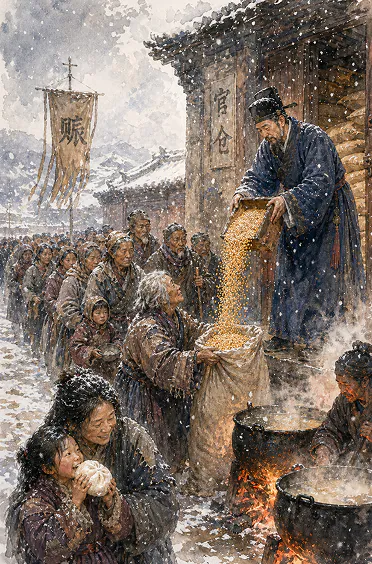
The Judgment of Hexagram 42 begins with a striking image: "Sacrifice on the part of those above for the increase of those below fills the people with a sense of joy and gratitude." In financial terms, this describes a flow of resources from those who have more to those who have less—whether that means a leader investing in their team, a parent funding a child's education, or a more established partner offering capital to a startup. The classical text insists this is not mere charity but the foundation of a thriving commonwealth. When resources move downward generously, loyalty and energy move upward in return.
The trigram structure reinforces this. Wind above represents penetration, influence, and the invisible circulation of opportunities. Thunder below represents movement, awakening, and sudden action. Together they depict a situation where external forces (Wind) stir internal readiness (Thunder) into productive motion. For your finances, this means the increase you are experiencing is not purely your own doing—it comes partly from conditions beyond you. The wise response is not to claim sole credit but to receive with gratitude and act with purpose.
The Image adds an ethical dimension that is often overlooked in financial contexts: "When he discovers good in others, he should imitate it and thus make everything on earth his own. If he perceives something bad in himself, let him rid himself of it." Increase is not just about money. It is about personal growth that makes you capable of holding and multiplying what you receive. A sudden financial gain without corresponding inner development can become a burden. Hexagram 42 asks you to grow as a person at the same rate your wealth grows.
The time of Increase does not last. The question is not whether you deserve this abundance, but whether you will use it to build something that outlasts the moment.
How Increase Shows Up in Real Finance & Wealth Situations
In practice, Hexagram 42 manifests as a period when the normal rules of scarcity seem suspended. Money appears from unexpected sources. Opportunities align with your capabilities. People want to invest in you or your projects. This can feel exhilarating, but the classical text is clear: "The time of INCREASE does not endure, therefore it must be utilized while it lasts." This is not a permanent condition. It is a window—and windows close.
The dynamic often plays out in relationships of unequal power. Someone with more resources (capital, connections, experience) extends help to someone with less. This could be a mentor offering seed funding, a parent gifting a down payment, or a senior colleague recommending you for a promotion. The Judgment calls this "sacrifice" because the giver is not receiving immediate material return. Yet the long-term return is loyalty, gratitude, and a strengthened community—all of which have financial value, though they cannot be quantified on a balance sheet.
A common mistake is to treat Increase as a signal to consume more. The hexagram warns against this. Line 6 describes someone in a high position who "helps no one" and "loses the furthering influence of others." In financial terms, this is the person who receives a raise and immediately upgrades their lifestyle, or the business owner who pockets a windfall instead of reinvesting in their team. The increase that was meant to flow through them becomes stuck, and stagnation follows. Hexagram 42 calls for circulation, not accumulation.
Another pattern is the hesitation that comes with unexpected good fortune. Line 2 speaks of a person who "produces in himself the conditions for it" and then receives increase "with the inevitability of natural law." But the key warning is: "Everything depends on his not letting unexpected good fortune make him heedless." Many people, when money arrives suddenly, either freeze in disbelief or act impulsively. Hexagram 42 counsels a middle path—receive the gift, but anchor it with inner steadiness. Do not let the wind of opportunity blow you off course.
Increase tests your character more than your scarcity ever did. How you handle abundance reveals who you truly are.
From Reading to Action — Applying Increase
The first step in applying Hexagram 42 to your financial life is to identify the direction of flow. Are you the one above giving, or the one below receiving? Or are you an intermediary, like Line 4 describes—someone who must ensure resources pass from leader to people without being withheld? Your role determines your conduct. If you are receiving, your task is gratitude and responsible use. If you are giving, your task is genuine sacrifice, not token generosity. If you are mediating, your task is transparency.
Line 1 offers specific guidance for the receiver: "If great help comes to a man from on high, this increased strength must be used to achieve something great for which he might otherwise never have found energy." This is a call to ambition. When someone invests in you, do not use the money to pay off ordinary expenses or maintain the status quo. Use it to leap—to do something you could not have done alone. The line promises "great good fortune" from selflessness, meaning the best use of increase is to serve a larger purpose, not just your comfort.
For those in a position to give, Line 5 is essential: "True kindness does not count upon nor ask about merit and gratitude but acts from inner necessity." If you are helping someone financially, do not keep a mental ledger of what they owe you. Do not give with strings attached or expect recognition. The classical text says such a "truly kind heart finds itself rewarded in being recognized," but the reward is incidental, not the motive. Give because the situation calls for it, and let the results take care of themselves.
Line 3 offers reassurance for those who worry that external circumstances will spoil their increase: "A time of blessing and enrichment has such powerful effects that even events ordinarily unfortunate must turn out to the advantage of those affected by them." In practical terms, this means that during a genuine Increase period, setbacks are less damaging than they would normally be. A market dip, a delayed payment, or a rejected proposal may actually redirect you toward something better. Trust the pattern without becoming reckless.
Use increase to do what you could not do before. That is the only way to honor the gift and make it last.
Practical Examples
Example 1: The Inherited Windfall
Situation: Your aunt passes away and leaves you $50,000. You feel guilty about the source of the money, unsure whether to save it, invest it, or use it for a long-deferred dream.
How to read it: This is a classic Line 1 scenario—"great help from on high." The money comes from outside your own effort, and it carries an implicit responsibility. The hexagram says this increased strength must be used for something great, not dissipated on ordinary expenses or paralyzed by guilt.
Next step: Identify one meaningful project that this money could catalyze—starting a business, funding education, making a down payment on a home—that would honor your aunt's legacy by creating lasting value. Do not spread the money thin. Concentrate it on a single transformative use.
Example 2: The Generous Investor
Situation: You run a small company and a wealthy acquaintance offers to invest $100,000 with no formal terms, just a handshake and a promise to "figure it out later." You are flattered but nervous.
How to read it: This mirrors the Judgment's "sacrifice on the part of those above." The investor is offering increase from a position of strength. But Line 5 warns against counting on gratitude or merit. The offer may be genuine, but without clear structure, it risks becoming a source of confusion.
Next step: Accept the offer, but immediately formalize the relationship with clear terms—equity, repayment schedule, or a defined exit. This protects both parties and honors the spirit of increase by ensuring the flow is clear and sustainable. Do not let informality breed future conflict.
Example 3: The Team Bonus Dilemma
Situation: Your department exceeded its targets, and you have discretion over a $20,000 bonus pool. You are tempted to keep most of it for yourself since you did the strategic work.
How to read it: Hexagram 42 explicitly warns against this. Line 6 describes someone in a high position who "helps no one" and "invites attacks." The Image says the way to self-increase is to imitate good in others and rid yourself of evil. Hoarding the bonus is the evil to be shed.
Next step: Distribute the bonus in a way that reflects genuine gratitude for your team's contributions. Even if you take a fair share, ensure the majority flows downward. The loyalty and energy this generates will return to you multiplied in future performance.
The test of Increase is not how much you receive, but how much you let pass through you to others.
Common Mistakes
• Assuming Increase means the good times will last forever. The Judgment explicitly states the opposite: "The time of INCREASE does not endure." Treating a windfall as a permanent new baseline leads to overspending and eventual disappointment. Use the increase while it lasts, but do not build your life on the assumption it will continue.
• Hoarding resources instead of circulating them. Line 6 is a direct warning against this. When you receive increase and keep it all for yourself, you cut off the very flow that brought it to you. Financial growth in the I Ching is never about accumulation alone—it is about movement. Stagnation is death.
• Giving with strings attached or expecting repayment. Line 5 makes clear that true kindness does not count merit or demand gratitude. If you help someone financially while secretly expecting them to owe you, you corrupt the relationship. The increase becomes a burden rather than a blessing.
• Failing to grow personally alongside financial growth. The Image emphasizes self-improvement as the most important increase. If your wealth grows faster than your wisdom, you become dangerous to yourself and others. Invest in your own character development at the same rate you invest your money.
Frequently Asked Questions
Does Hexagram 42 guarantee financial success?
No. Hexagram 42 describes a pattern of increase, but it is not a promise. The classical text emphasizes that this time must be utilized while it lasts. Success depends on your conduct—receiving with gratitude, giving without attachment, and using resources for meaningful purposes. The hexagram offers guidance, not guarantees.
What if I am the one who needs to receive help but feel proud or ashamed?
This is a common emotional block. The Judgment calls the flow of increase "extremely valuable for the flowering of the commonwealth." Receiving help is not weakness; it is participation in a healthy system. Line 1 encourages you to accept the help and use it for something great. Pride that prevents you from receiving is self-sabotage.
How do I know if an opportunity is genuine Increase or a trap?
Genuine Increase, according to Hexagram 42, comes with a sense of flow and alignment. It does not require you to compromise your integrity. The trigrams—Wind and Thunder—suggest movement that is natural, not forced. If an opportunity feels manipulative, secretive, or requires you to deceive others, it is not true Increase. Trust your unease.
Can I use Hexagram 42 to time the stock market?
The I Ching is not a trading tool. Hexagram 42 describes a broader pattern of increase in your life circumstances, not a short-term market prediction. If you are experiencing a period of personal and professional growth, you might invest more aggressively during this window. But do not try to read daily market movements through the hexagram. Use it for strategic life decisions, not tactical trades.
What should I do if I missed the window of Increase?
The hexagram does not say that missing the window leads to permanent loss. It says the time does not endure, so you must use it while it lasts. If you have already passed through a period of increase without acting, examine what held you back—fear, greed, or confusion. Learn from it. Another pattern will come. The I Ching is cyclical, not linear.
Closing Reflection
Hexagram 42 challenges the modern assumption that financial growth is purely personal achievement. The classical text insists that increase flows from above to below, from those who have to those who need, and that its purpose is the flowering of the commonwealth—not the enrichment of the individual. This does not mean you should give away everything you have. It means you should hold your resources with open hands, ready to let them circulate when the moment calls. The time of Increase is precious precisely because it does not last. Use it to build, to give, and to grow into the person capable of handling even greater abundance when the next wave arrives.
Turn this guide into your own reading
After reading the explanation, cast with a real question. We will carry your question into the reading flow so the result can be interpreted and saved.
Sources & References
Zhouyi / I Ching primary text
The received text of the Book of Changes, including the Judgment, Image, and line statements.
The I Ching or Book of Changes, Richard Wilhelm / Cary F. Baynes
Princeton University Press translation used as a major English-language reference point for names, structure, and commentary framing.
The Sacred Books of China: The Texts of Confucianism, James Legge
Classical English reference used for comparative reading of source terminology and commentarial tradition.
The Classic of Changes, Richard John Lynn
Modern scholarly translation consulted for comparative interpretation and editorial cross-checking.
Related Hexagrams
Continue from this guide into specific hexagram study.
Related Guides
Continue with adjacent guides for more context and deeper study.