
Hexagram Career
Hexagram 42 (Increase) in Career: I Ching Guidance for Work and Professional Life
What does Hexagram 42 (Increase) mean for your career? Sacrifice on the part of those above for the increase of those below fills the people with a sense of joy and gratitude that is extremely valuable for the flowe... Learn how the I Ching guides professional decisions, leadership, timing, and workplace dynamics.
Hexagram 42 (Increase) in Career: I Ching Guidance for Work and Professional Life
You have been working hard—really working hard—and yet something feels off. Perhaps you are the manager who has been giving everything to your team, only to wonder if your efforts are truly landing. Or maybe you are the individual contributor who senses that a promotion or new opportunity is within reach, but you are not sure how to bridge the gap between where you are and where you want to be. You might even be the entrepreneur who has built something promising but now faces the delicate question of how to grow without losing what made your venture special in the first place. These are the moments when the ancient wisdom of the I Ching becomes surprisingly, even startlingly, relevant.
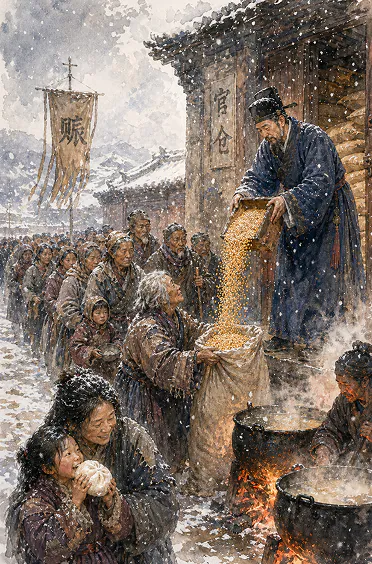
The hexagram that speaks most directly to these situations is Hexagram 42, known in the Wilhelm/Baynes tradition as Increase. Its structure—Wind above, Thunder below—depicts a dynamic of mutual reinforcement. Wind spreads the sound of thunder; thunder gives the wind its power. The Judgment describes a time when “sacrifice on the part of those above for the increase of those below fills the people with a sense of joy and gratitude,” creating conditions where even difficult enterprises succeed. This is not a hexagram about passive good fortune. It is about a specific pattern of growth that flows from generosity, timing, and ethical action.
In the sections that follow, we will explore what Hexagram 42 means for your career and professional life, drawing directly from the classical text. You will learn to recognize when Increase is operating in your situation, how to act in alignment with its energy, and—just as importantly—what mistakes to avoid when this powerful but temporary time arrives. This is not fortune-telling. It is pattern recognition, grounded in three thousand years of observation about how human endeavors actually flourish.
Where This Guide Is Most Useful
• You are in a leadership role and wondering how to grow your team or organization without burning people out. Hexagram 42 speaks directly to the dynamic where those in authority give something up—resources, credit, control—for the benefit of those below, and in doing so, create the conditions for genuine, sustainable growth.
• You sense that a period of professional opportunity has arrived, but you are unsure how to make the most of it. The Judgment warns that “the time of INCREASE does not endure, therefore it must be utilized while it lasts.” If you feel a window opening, this hexagram helps you see what kind of action it calls for.
• You are considering a career move—a promotion, a new job, a major project—and you want to know whether the timing is right and what conduct will lead to success. Hexagram 42 is not about whether you can succeed, but about how to succeed in a way that builds lasting value for everyone involved.
Understanding Increase in Career & Work Context
The core insight of Hexagram 42 is that genuine increase in any human system—whether a team, a company, or your own career—happens when resources flow from those who have more to those who have less. The Judgment describes this as “sacrifice on the part of those above for the increase of those below.” This is not charity or noblesse oblige. It is a practical recognition that when those at the top share their strength—their knowledge, their connections, their authority, their budget—they create a reservoir of loyalty and energy that makes ambitious undertakings possible.
The trigram structure reinforces this point. Thunder, the lower trigram, represents movement, excitement, and the sudden release of energy. Wind, the upper trigram, represents gentle penetration, influence, and the spreading of news or ideas. When thunder explodes upward, wind carries its sound far and wide. In career terms, this is the pattern where a leader’s initiative (thunder) is amplified by the organization’s culture or network (wind), creating results far greater than either could achieve alone. But note the direction: the energy moves upward from below, even as the resources flow downward from above. Growth is not imposed; it is released.
The Image adds an ethical dimension that is crucial for professional life. It says that when a person “discovers good in others, he should imitate it and thus make everything on earth his own. If he perceives something bad in himself, let him rid himself of it.” This is Increase as self-cultivation. The hexagram is not just about external growth—a bigger budget, a better title, a larger team. It is about the internal work of becoming someone who can receive and use increase wisely. In a career context, this means actively learning from colleagues who excel, and honestly confronting your own weaknesses before they become obstacles.
What makes Hexagram 42 especially valuable for career guidance is its insistence that this time of increase does not last. The Judgment is explicit: “The time of INCREASE does not endure, therefore it must be utilized while it lasts.” This is not a warning meant to create anxiety. It is a practical observation that windows of opportunity close, that momentum fades, and that the most successful professionals are those who recognize when conditions are favorable and act decisively. The question is not whether you will ever have another chance, but whether you will use this one.
The takeaway: Increase in your career is not about grabbing more for yourself. It is about creating the conditions—through generosity, learning, and timing—for genuine growth that benefits everyone involved.
How Increase Shows Up in Real Career & Work Situations
In practice, Hexagram 42 manifests in several recognizable patterns. The most common is the situation where a senior person—a manager, a mentor, a more experienced colleague—deliberately gives something up for the benefit of someone more junior. This might mean giving a promising employee credit for a successful project, or delegating a high-visibility assignment that the senior person could have kept for themselves. The Judgment tells us that this kind of sacrifice “fills the people with a sense of joy and gratitude that is extremely valuable for the flowering of the commonwealth.” In modern terms, this is how you build a team that will go through walls for you.
Another pattern is the moment when an organization invests heavily in its people—training programs, better tools, more autonomy—without immediately demanding a return. This is counterintuitive in a business culture that often demands quarterly results. But Hexagram 42 suggests that such investment, when genuine, creates a level of engagement and creativity that pays dividends far beyond what a more transactional approach would yield. The key word is genuine. People can tell when “investment” is really manipulation in disguise.
A third pattern, less obvious but equally important, is the personal version of Increase: the period when you are learning rapidly, absorbing new skills and perspectives, and feeling yourself grow. The Image’s instruction to imitate what is good in others and eliminate what is bad in yourself is a description of this process. In career terms, this might be the time when you join a new company or team and consciously adopt the best practices of your new colleagues while shedding habits that no longer serve you. This is Increase as self-improvement, and it is often the foundation for the more visible forms of career growth that follow.
Line 2 of the hexagram speaks directly to this internal dimension: “A man brings about real increase by producing in himself the conditions for it, that is, through receptivity to and love of the good. Thus the thing for which he strives comes of itself, with the inevitability of natural law.” This is not magical thinking. It is the observation that when you genuinely prepare yourself—through learning, through character development, through building relationships—opportunities tend to appear because you are ready for them. The line warns, however, that you must not let unexpected good fortune make you heedless. You must “make it your own through inner strength and steadfastness.”
The takeaway: Increase shows up both in external opportunities and in internal readiness. The two are connected: the more you prepare yourself, the more you will recognize and be able to use the opportunities that come.
From Reading to Action: Applying Increase
If you have consulted the I Ching and received Hexagram 42, or if you recognize its pattern in your current career situation, the question becomes: what do you actually do? The classical text gives remarkably specific guidance, particularly through its moving lines.
First, examine your position. Are you in a leadership role, or are you the one receiving increase? If you are above—a manager, a mentor, someone with more resources or authority—your task is to give. Line 1 describes a situation where “great help comes to a man from on high,” and this increased strength must be used “to achieve something great for which he might otherwise never have found energy.” If you have received support, recognition, or resources from your organization, do not hoard them. Use them to accomplish something ambitious that serves the larger good. This is how you justify and multiply the increase you have received.
If you are in a position to mediate between leaders and followers—a middle manager, a project lead, a department head—Line 4 is especially relevant. It says that “there should be men who mediate between leaders and followers. These should be disinterested people, especially in times of increase, since the benefit is to spread from the leader to the people.” Your role is to ensure that resources and credit flow through you, not stop with you. Nothing should be “held back in a selfish way.” This is difficult, because the natural human tendency is to take credit and keep resources. But the text is clear: the intermediary who serves as a genuine conduit creates the conditions for great undertakings that require “the inner assent of all concerned.”
Line 5 speaks to the highest form of leadership in this hexagram: “True kindness does not count upon nor ask about merit and gratitude but acts from inner necessity.” This is the leader who gives because giving is who they are, not because they expect a return. Paradoxically, such leaders find themselves “rewarded in being recognized,” and their influence spreads without resistance. If you find yourself calculating whether your generosity will be reciprocated, you are not yet operating at the level this hexagram calls for.
Finally, Line 6 is a warning. It describes those in high place who neglect their duty to bring increase to those below. “By neglecting this duty and helping no one, they in turn lose the furthering influence of others and soon find themselves alone.” Confucius’s commentary on this line is worth memorizing: “The superior man sets his person at rest before he moves; he composes his mind before he speaks; he makes his relations firm before he asks for something.” If you are in a position of authority and you have not been generous, do not be surprised when people do not cooperate with your initiatives. The problem is not with them; it is with your failure to establish the conditions for mutual increase.
The takeaway: Action in a time of Increase depends on your position. If you are above, give. If you are in the middle, pass it through. If you are below, learn and prepare. In every case, the quality of your inner state matters as much as your outer actions.
Practical Examples
Example 1: The New Manager Who Wants to Build a Strong Team
Situation: You have just been promoted to manage a small team. You are eager to prove yourself and worried that if you delegate too much, you will lose control. Your instinct is to hold onto key decisions and credit for successes.
How to read it: Hexagram 42 suggests that this instinct is exactly wrong. The time of Increase calls for sacrifice from those above. Your promotion is the “great help” described in Line 1. You now have increased strength, and you must use it to achieve something great for the team, not just for yourself. This means giving your team members meaningful ownership of projects, publicly crediting their contributions, and investing your time in their development.
Next step: Identify one significant project or decision you have been keeping to yourself. Give it to a team member with clear authority and your full support. Then, when the project succeeds—and it likely will—make sure everyone knows who did the work. This is the sacrifice that creates genuine increase.
Example 2: The Individual Contributor Who Has Plateaued
Situation: You have been in your role for three years. You are competent but not growing. You sense that something is available to you—a promotion, a new role, a big project—but you cannot seem to reach it. You feel stuck.
How to read it: Hexagram 42, particularly Line 2, speaks directly to this situation. “A man brings about real increase by producing in himself the conditions for it.” The problem may not be external; it may be that you have not yet prepared yourself to receive the increase that is available. The Image’s instruction to “imitate what is good in others” and “rid yourself of what is bad” is your practical path. Look at colleagues who have the career growth you want. What skills do they have that you lack? What habits hold you back?
Next step: Choose one skill that would clearly move you toward your goal—public speaking, data analysis, strategic thinking, whatever it is—and dedicate the next 90 days to developing it. Find someone who does it well and learn from them. At the same time, identify one professional habit that limits you—perhaps you avoid conflict, or you take on too much, or you fail to advocate for yourself—and work to eliminate it. This internal work is the foundation for external increase.
Example 3: The Founder Who Needs to Scale Without Losing Culture
Situation: Your startup has grown from five to thirty people in a year. The energy that carried you through the early days is starting to fray. You are worried that growth will destroy the very culture that made your company successful.
How to read it: Hexagram 42 describes a time when “the earth partakes of the creative power of heaven, forming and bringing forth living beings.” This is a period of fruitful expansion, but it requires the right structure. The Wind trigram above represents culture, communication, and the spread of values. The Thunder trigram below represents initiative and action. Your task is to ensure that the energy from below (your team’s initiative and creativity) is amplified by the culture from above (your company’s values and systems). This is the role of the intermediary described in Line 4.
Next step: Instead of trying to control growth from the top, invest in middle managers who can serve as genuine conduits between you and the team. Give them real authority and real resources. Make sure your company’s values are not just posters on the wall but are modeled in every decision about who gets promoted, how projects are assigned, and what behavior is rewarded. This is the sacrifice—giving up some control—that creates sustainable increase.
The takeaway: In every career situation, Increase asks the same question: What can you give, learn, or pass through to create growth that serves everyone?
Common Mistakes
• Mistaking accumulation for increase. The most common error is to think that Increase means getting more for yourself—a higher salary, a bigger title, more power. In fact, Hexagram 42 is about the opposite. It is about giving, sharing, and passing resources through. People who try to accumulate during a time of Increase often find that their gains are hollow and short-lived.
• Assuming Increase will last. The Judgment explicitly warns that “the time of INCREASE does not endure.” Yet many professionals act as if a good run will continue indefinitely. They become complacent, or they fail to invest their gains wisely. The wise response is to recognize the temporary nature of the opportunity and act with urgency and purpose.
• Neglecting the internal dimension. It is easy to focus on external opportunities—the promotion, the new job, the big project—and ignore the inner work that makes those opportunities sustainable. The Image’s instruction to imitate good and eliminate bad is not optional. Without this inner cultivation, external increase often leads to arrogance, burnout, or failure.
• Holding back as an intermediary. Line 4 describes the crucial role of the middle manager or project lead who passes resources and credit from above to below. The mistake is to hold back—to take credit for the team’s work, to hoard information, to protect your own position. This creates resentment and ultimately undermines the very increase you are trying to achieve.
Frequently Asked Questions
What does Hexagram 42 mean for a job interview or negotiation?
Hexagram 42 in a job interview context suggests that the best approach is not to demand what you want, but to show what you can contribute. The hexagram’s energy is about increase flowing from those who have to those who need. In a negotiation, this means leading with what you can give—your skills, your experience, your network—and trusting that the increase will come back to you. This does not mean being a pushover. It means recognizing that genuine increase is mutual.
How do I know if I am in a time of Increase or a time of something else?
The hallmark of a time of Increase is that generosity works. When you give—credit, resources, time, attention—it comes back multiplied. If you find that your efforts to help others are met with suspicion, or that giving leads to depletion rather than growth, you may be in a different phase. The I Ching often pairs Increase with its opposite, Hexagram 41 (Decrease). If you are in a time of Decrease, the wise action is to conserve and simplify, not to give generously.
Can Hexagram 42 apply to someone who is unemployed or between jobs?
Absolutely. For someone unemployed, Hexagram 42 speaks to the importance of preparation and self-cultivation. Line 2’s instruction to “produce in yourself the conditions for increase” is directly relevant. Use the time to learn new skills, to eliminate bad habits, and to build relationships. The Image’s advice to “imitate what is good in others” suggests that you study people who have successfully navigated similar transitions. The time of Increase will come again; your task is to be ready for it.
What if I am in a toxic workplace? Does Increase still apply?
Hexagram 42 assumes a context where increase is possible—where generosity is met with gratitude, where growth serves the common good. If you are in a toxic environment where giving is exploited and good work is not recognized, this hexagram may not be the primary guidance you need. In such a situation, the I Ching might point to a different hexagram, such as Hexagram 36 (Darkening of the Light), which advises concealment and careful withdrawal. Use Hexagram 42 when the conditions for genuine increase are present, not when you are trying to force growth in a hostile environment.
How does Hexagram 42 relate to other career hexagrams like Hexagram 35 (Progress) or Hexagram 46 (Pushing Upward)?
Hexagram 35 (Progress) is about advancement that is recognized and rewarded—a bright, straightforward time of moving forward. Hexagram 46 (Pushing Upward) is about steady, gradual advancement through hard work and patience. Hexagram 42 is different. It is about a specific dynamic of increase that flows from generosity and sacrifice. It is more relational and more temporary. While Progress and Pushing Upward describe the journey of the individual, Increase describes the pattern of growth that happens when people work together in a particular way. All three can appear in a career, but they call for different actions.
Closing Reflection
The wisdom of Hexagram 42 is counterintuitive in a culture that often equates success with accumulation. It asks you to trust that giving creates more than taking, that generosity is a form of strength, and that the most sustainable growth comes not from grabbing but from sharing. This is not naive idealism. It is a practical observation, tested over centuries, about how human systems actually flourish. The time of Increase is a gift, but it is also a test. It tests whether you have the courage to give when you could hold, to share when you could hoard, to build others up when you could build yourself up alone. Pass that test, and the increase you create will last far beyond the temporary window of opportunity. Fail it, and you will find yourself alone, wondering why your success felt so empty. The choice is yours, and the time to act is now.
Turn this guide into your own reading
After reading the explanation, cast with a real question. We will carry your question into the reading flow so the result can be interpreted and saved.
Sources & References
Zhouyi / I Ching primary text
The received text of the Book of Changes, including the Judgment, Image, and line statements.
The I Ching or Book of Changes, Richard Wilhelm / Cary F. Baynes
Princeton University Press translation used as a major English-language reference point for names, structure, and commentary framing.
The Sacred Books of China: The Texts of Confucianism, James Legge
Classical English reference used for comparative reading of source terminology and commentarial tradition.
The Classic of Changes, Richard John Lynn
Modern scholarly translation consulted for comparative interpretation and editorial cross-checking.
Related Hexagrams
Continue from this guide into specific hexagram study.
Related Guides
Continue with adjacent guides for more context and deeper study.