
Hexagram Love
Hexagram 37 (The Family) in Love: I Ching Guidance for Relationships
What does Hexagram 37 (The Family) reveal about love and relationships? The foundation of the family is the relationship between husband and wife. The tie that holds the family together lies in the loyalty and perseverance of the wi... Explore how the I Ching guides emotional connection, dating, and partnership dynamics.
Hexagram 37 (The Family) in Love: I Ching Guidance for Relationships
Introduction
You’ve been together long enough that the initial spark has settled into something deeper—but lately, you find yourselves circling the same argument about household responsibilities, or you feel a quiet distance growing where there used to be easy connection. Perhaps you’re the one who carries the emotional load, or you’re the one who feels perpetually misunderstood when you try to set a boundary. The excitement of early romance has given way to something more complex: the daily work of building a life together, and you’re wondering if you’re doing it right.
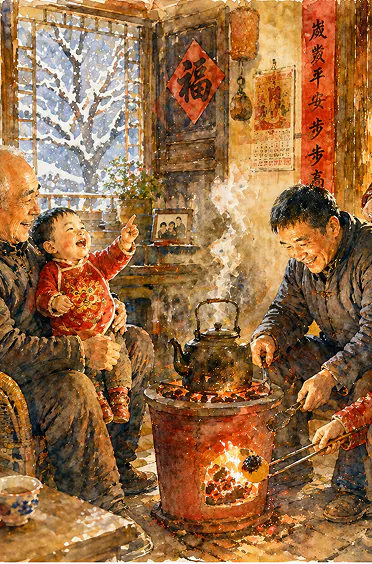
This is exactly the territory where Hexagram 37, The Family (also known as Chia Jên), comes into focus. In the I Ching, this hexagram appears when relationships are moving from individual passion toward shared structure—when the question is no longer “do we love each other?” but “how do we live well together?” The Judgment speaks directly to this: it describes a household where each person knows their role and fulfills it with integrity, and it insists that the quality of our intimate relationships shapes everything else in our lives. The trigram structure—Wind above, Fire below—pictures influence radiating outward from a warm, centered source, just as a family’s inner order affects the wider world.
If you’ve been feeling the weight of partnership, if you’re navigating the transition from dating to cohabitation or marriage, or if you’re simply trying to bring more harmony into a relationship that has become strained, this guide is for you. The Family does not promise easy answers, but it offers a remarkably practical framework for understanding what holds relationships together—and what tears them apart.
Where This Guide Is Most Useful
• You are in a committed partnership and feel the need for clearer roles, boundaries, or shared values. Whether you’re newly living together or have been married for years, The Family speaks to the challenge of creating a household culture that supports both partners.
• You are experiencing conflict around responsibility, authority, or decision-making in your relationship. Perhaps one partner feels overburdened, or there is disagreement about who leads in which areas. This hexagram offers guidance on balancing structure with warmth.
• You are considering how your relationship fits into a larger context—family, community, or life goals. The Family is not just about two people; it’s about how a partnership becomes a foundation for everything else, including parenting, career, and social life.
Understanding The Family in Love & Relationships Context
The Judgment of Hexagram 37 begins with a statement that can feel jarring to modern sensibilities: “The foundation of the family is the relationship between husband and wife. The tie that holds the family together lies in the loyalty and perseverance of the wife.” If you bristle at the gendered language, you are not alone. But the classical text is pointing to something more structural than prescriptive. The “wife” here represents the inner, receptive, stabilizing force in any partnership, while the “husband” represents the outer, active, protective force. Every relationship needs both—someone who tends the hearth and someone who engages the world, and these roles can be held by either partner or shared between them. The key insight is that order arises when each person occupies their proper place with integrity.
The Image expands this idea: “Heat creates energy: this is signified by the wind stirred up by the fire and issuing forth from it. This represents influence working from within outward.” In a relationship, this means that the quality of your private life together inevitably shapes how you show up in the world. A home where there is trust, clear communication, and mutual respect generates warmth that others can feel. Conversely, a relationship that is chaotic or resentful drains energy that could be used for growth. The Image also warns that words have influence only when they are “pertinent and clearly related to definite circumstances”—general complaints or vague criticism accomplish nothing. Effective communication in love must be specific, grounded, and consistent.
The trigrams deepen this understanding. Fire (Li) below represents clarity, warmth, and the inner light of the household—the emotional center. Wind (Xun) above represents gentle but persistent influence, the way family patterns spread outward. When fire burns steadily, it creates wind; when a relationship is healthy, its warmth naturally radiates. But if the fire is smothered or the wind becomes a gale, the system breaks down. Hexagram 37 asks you to check: Is your inner fire still burning? Is your influence on each other gentle and consistent, or forceful and erratic?
The family is society in embryo; it is the native soil on which performance of moral duty is made easy through natural affection. — The Judgment
How The Family Shows Up in Real Love & Relationships Situations
The most common way Hexagram 37 appears in relationships is through the tension between structure and freedom. You want a partnership that feels safe and predictable, but you also want spontaneity and passion. The Family does not see these as opposites. Instead, it insists that true freedom within a relationship requires clear boundaries—what the third line calls “strong dikes within which complete freedom of movement is allowed each individual.” Think of a river: without banks, it becomes a swamp; with well-built banks, it flows powerfully and can even generate energy. In love, the “dikes” are your shared agreements about fidelity, finances, time, and responsibilities. They do not constrain love; they channel it so that it can do real work in the world.
Another recognizable scenario is the imbalance of effort. Perhaps you are the one who manages the household, plans social events, and remembers birthdays, while your partner is more focused on career or personal projects. The second line speaks of the wife (or the inner partner) who “attends to the nourishment of her family and to the food for the sacrifice”—in modern terms, the person who maintains the daily rhythms and the meaningful rituals. If this work is not valued or shared, resentment builds. The hexagram suggests that this role, when fulfilled with perseverance, brings “good fortune to the whole house.” But it also warns, in the third line, against “too great severity” or “too great weakness.” The solution is not to demand perfection but to find a balance where both partners contribute according to their capacities.
A third dynamic involves authority and decision-making. Who leads when there is a disagreement? The fifth line describes the ideal leader: a “fatherly man who is richly endowed in mind. He does nothing to make himself feared; on the contrary, the whole family can trust him, because love governs their intercourse.” This is not about dominance but about earned authority—the partner who leads through example, patience, and genuine care. In practice, this might mean that the partner with more experience in a given area takes the lead there, while deferring in other areas. The key is that authority is based on competence and trust, not on force or tradition.
If words and conduct are not in accord and not consistent, they will have no effect. — The Image
From Reading to Action: Applying The Family
When Hexagram 37 appears in a relationship reading, the first question to ask is: Where is our household out of order? This does not mean being tidy or conventional. It means looking at whether each partner knows what is expected of them, whether communication is clear and consistent, and whether the emotional climate is warm or cold. Start by examining the six lines of the hexagram, each of which describes a specific relational position.
Line 1 speaks of establishing order from the beginning: “The family must form a well-defined unit within which each member knows his place.” If your relationship is new, this is a call to set clear expectations early. If you are in an established relationship, it may mean revisiting agreements that have become fuzzy. The line warns that if you wait too long to enforce order, “the whims and passions, grown stronger with the years, offer resistance.” In practice, this could mean having a difficult conversation about finances or household duties that you have been avoiding. Better to face it now than to let resentment build.
Line 2 is about the inner partner—the one who maintains the home and the rituals. If this is you, the counsel is to “seek nothing by means of force, but quietly to confine oneself to the duties at hand.” This is not about submission; it is about finding satisfaction in the work of nurturing the relationship. If you feel undervalued in this role, the line suggests that your perseverance will eventually be recognized. But it also implies that you should not try to control outcomes through pressure or complaint.
Line 3 addresses the balance between severity and indulgence. In a relationship, this shows up as the question of how much to accommodate your partner’s flaws. Too much severity leads to resentment; too much indulgence leads to disrespect. The wise course is to “build strong dikes”—set firm boundaries around what is essential (respect, fidelity, honesty) while allowing freedom in non-essentials (hobbies, socializing, personal space). If you are unsure, the line suggests that erring on the side of clarity is better than erring on the side of permissiveness.
Line 4 speaks of the “woman of the house” (or the steward) whose careful management brings well-being. In a partnership, this might be the partner who handles the budget, plans the calendar, or manages the emotional temperature. The line says that “well-being prevails when expenditures and income are soundly balanced”—not just financially, but in terms of energy, time, and attention. If one partner is giving more than they receive, the relationship is out of balance.
Line 5 describes the ideal leader: the partner who governs through love rather than fear. If you are in a position of greater authority in your relationship (perhaps because of age, experience, or temperament), this line asks you to lead with generosity and trust. Do not micromanage or criticize. Let your character do the work.
Line 6 is the final counsel: “If he cultivates his personality so that it works impressively through the force of inner truth, all goes well with the family.” In the end, the health of your relationship depends on your own personal development. You cannot control your partner, but you can become the kind of person who creates a safe and loving environment. This is the deepest teaching of Hexagram 37.
Too great severity toward one’s own flesh and blood leads to remorse. The wise thing is to build strong dikes within which complete freedom of movement is allowed each individual. — Third Line
Practical Examples
Example 1: The Newly Cohabiting Couple
Situation: Alex and Jordan have been dating for two years and recently moved in together. Alex is tidy and likes to plan meals and chores in advance; Jordan is more spontaneous and tends to leave dishes in the sink. Small irritations are becoming big arguments. Alex feels disrespected; Jordan feels controlled.
How to read it: This is a classic Line 1 situation. The family (or household) has not yet formed “a well-defined unit.” Alex and Jordan need to establish clear rules of order before resentment solidifies. The hexagram advises setting expectations early, even if it feels awkward. The “remorse” of initial conflict will pass if the foundation is laid properly.
Next step: Have a structured conversation about household responsibilities. Use a shared calendar or chore chart to make expectations explicit. Agree on what is non-negotiable (e.g., cleaning up after cooking) and where flexibility is allowed. The goal is not to eliminate spontaneity but to create “strong dikes” that protect the relationship from petty conflict.
Example 2: The Overfunctioning Partner
Situation: Maria handles everything: the kids’ schedules, the grocery shopping, the holiday planning, and most of the emotional labor in her marriage. Her partner, David, is loving but passive. Maria is exhausted and resentful, but when she brings it up, David feels criticized and withdraws.
How to read it: This is a Line 2 and Line 4 situation. Maria is in the inner position, attending to the nourishment of the family, but the balance is off. The fourth line warns that “well-being prevails when expenditures and income are soundly balanced.” Maria is over-investing energy without receiving proportionate support. The third line also applies: David’s indulgence (letting Maria do everything) is leading to “disgrace” in the form of marital strain.
Next step: Maria needs to stop overfunctioning. This does not mean nagging; it means quietly withdrawing from tasks that David should handle. The second line advises “seeking nothing by force”—no ultimatums or guilt trips. Instead, Maria can say, “I’m going to step back from managing the weekend plans. I trust you to handle it.” David will either step up, or the household will experience the natural consequences of his inaction. The hexagram trusts that this process, though uncomfortable, will lead to a more balanced order.
Example 3: The Power Struggle
Situation: After ten years of marriage, Priya and Sam are locked in a pattern of criticism and defensiveness. Priya feels Sam is too controlling about money; Sam feels Priya is too impulsive. Each believes they are right, and neither will yield.
How to read it: This is a Line 5 and Line 6 situation. The fifth line describes the ideal leader who “does nothing to make himself feared; on the contrary, the whole family can trust him, because love governs their intercourse.” Neither Priya nor Sam is leading with love—they are leading with fear and control. The sixth line offers the solution: cultivate your own character. The problem is not the money; it is the lack of trust and the failure to lead through example.
Next step: Both partners need to pause the power struggle and focus on self-cultivation. For Priya, this might mean demonstrating financial responsibility through her own actions rather than resisting Sam’s control. For Sam, it might mean showing trust by loosening the reins incrementally. The hexagram suggests that when each partner works on their own integrity, the relationship order will naturally follow. A couples therapist can help create a safe space for this work.
A king is the symbol of a fatherly man who is richly endowed in mind. He does nothing to make himself feared; on the contrary, the whole family can trust him, because love governs their intercourse. — Fifth Line
Common Mistakes
• Mistaking “The Family” for traditional gender roles. The hexagram’s language about husband and wife reflects its historical context, but the underlying principle is about complementary roles, not fixed identities. In a modern relationship, the “inner” and “outer” positions can be held by either partner, or shared. The mistake is to assume that the hexagram prescribes a specific arrangement rather than a relational structure.
• Confusing order with rigidity. The Family emphasizes clear roles and boundaries, but it also warns against “too great severity.” A common misinterpretation is to think that the hexagram demands strict control or conformity. In fact, it advocates for “strong dikes within which complete freedom of movement is allowed.” The goal is not to eliminate spontaneity but to create a safe container for it.
• Assuming the hexagram is only about biological families. The Family applies to any committed partnership, including childless couples, same-sex couples, and chosen families. The principles of clear roles, consistent conduct, and warm leadership are universal. Do not dismiss this hexagram because you do not have children or a traditional household.
• Reading the hexagram as a judgment on your partner. When Hexagram 37 appears, it is easy to think, “My partner needs to step up” or “They are not fulfilling their role.” But the hexagram always begins with self-examination. The sixth line is clear: “If he cultivates his personality so that it works impressively through the force of inner truth, all goes well.” Start with yourself.
Frequently Asked Questions
Does The Family mean I should stay in an unhappy relationship?
No. Hexagram 37 describes a healthy pattern of relationship, not a command to remain in any situation that carries its name. If your relationship is abusive, chronically unbalanced, or fundamentally misaligned, the hexagram may be showing you what is missing rather than what you must accept. The family is “society in embryo”—if the embryo is diseased, it may need to be released.
What if I am single and I get The Family in a love reading?
The Family can speak to your relationship with yourself or your family of origin. It may be asking you to establish order in your own life before entering a partnership. Alternatively, it can indicate that you are ready for a committed relationship and that the next step is to create a stable foundation—whether that means clarifying your values, healing family patterns, or preparing your home and heart for another person.
How do I apply The Family to a non-traditional relationship, like polyamory or living apart together?
The principles of The Family are flexible. The key is that your relationship unit—whatever form it takes—has clear roles, consistent conduct, and warm leadership. In a polyamorous arrangement, this might mean clear agreements about time, communication, and emotional boundaries. In a living-apart-together relationship, it might mean defining how you maintain connection and shared rituals despite physical distance. The hexagram’s emphasis on structure and clarity is even more important in non-traditional contexts.
Is The Family only about romantic love, or can it apply to friendships and family bonds?
While this guide focuses on romantic relationships, The Family applies to any close bond where you share a household or a life. The five social relationships mentioned in the Judgment—parent and child, husband and wife, elder and younger sibling, ruler and subject, friend and friend—are all within its scope. If you are reading this hexagram about a friendship or a family relationship, the same principles of clear roles, consistent conduct, and warm leadership apply.
What if I get a moving line that seems negative, like the third line’s warning about remorse?
Moving lines are not predictions of doom; they are descriptions of current dynamics. The third line’s “remorse” indicates that you are currently out of balance—either too strict or too lenient. The line shows you the consequence of that imbalance, but it also offers the remedy: find the mean between severity and indulgence. No line in The Family is irredeemable; each one points toward a correction you can make.
In the last analysis, order within the family depends on the character of the master of the house. — Sixth Line
Closing Reflection
Hexagram 37, The Family, is not a hexagram about perfection. It is about creating conditions in which love can do its real work. The fire must burn steadily, the wind must blow gently, and the household must have walls that both protect and allow freedom. If you are in a relationship that feels chaotic or strained, this hexagram invites you to step back and look at the structure—not to impose rigid rules, but to build the “strong dikes” that allow your love to flow without flooding everything in its path. The work is not glamorous; it involves consistent small acts of attention, clear communication, and the humble willingness to cultivate your own character before trying to change your partner. But this is precisely how a partnership becomes a true home—a place where both people can grow, and from which they can engage the world with warmth and strength.
Turn this guide into your own reading
After reading the explanation, cast with a real question. We will carry your question into the reading flow so the result can be interpreted and saved.
Sources & References
Zhouyi / I Ching primary text
The received text of the Book of Changes, including the Judgment, Image, and line statements.
The I Ching or Book of Changes, Richard Wilhelm / Cary F. Baynes
Princeton University Press translation used as a major English-language reference point for names, structure, and commentary framing.
The Sacred Books of China: The Texts of Confucianism, James Legge
Classical English reference used for comparative reading of source terminology and commentarial tradition.
The Classic of Changes, Richard John Lynn
Modern scholarly translation consulted for comparative interpretation and editorial cross-checking.
Related Hexagrams
Continue from this guide into specific hexagram study.
Related Guides
Continue with adjacent guides for more context and deeper study.