
Hexagram Career
Hexagram 21 (Biting Through) in Career: I Ching Guidance for Work and Professional Life
What does Hexagram 21 (Biting Through) mean for your career? When an obstacle to union arises, energetic biting through brings success. This is true in all situations. Whenever unity cannot be established, the obstruction... Learn how the I Ching guides professional decisions, leadership, timing, and workplace dynamics.
Hexagram 21 (Biting Through) in Career: I Ching Guidance for Work and Professional Life
You've been patient. You've tried collaboration, diplomacy, and giving people the benefit of the doubt. Yet there's a situation at work that simply will not resolve—a colleague who consistently undermines team unity, a vendor who breaches agreements without consequence, or a systemic problem that everyone tiptoes around. The obstacle persists, and with each passing week, it erodes trust and momentum. You sense that gentle measures have reached their limit, and something more decisive is required.
This is the precise territory of Hexagram 21: Biting Through. In the I Ching, this hexagram appears when an obstruction to union has taken root—something or someone is deliberately blocking the way. The Judgment is direct: "When an obstacle to union arises, energetic biting through brings success." The image combines the clarity of Fire (Li) above with the excitement of Thunder (Zhen) below, suggesting that effective action requires both clear perception and forceful movement. This is not a hexagram about aggression; it is about the necessity of removing what prevents healthy connection, whether in teams, partnerships, or your own professional integrity.
As we explore Hexagram 21 in the context of career and work, you'll discover that its wisdom is not about punishment for its own sake, but about the courage to name what is broken and the discernment to act with precision. The I Ching reminds us that unqualified hardness would be too violent, while unqualified gentleness would be too weak. The art lies in combining both—seeing clearly, then acting decisively.
Where This Guide Is Most Useful
• When a specific person or behavior is actively blocking team collaboration or project progress, and softer approaches have failed to create change. This hexagram addresses deliberate obstruction, not mere misunderstanding.
• When you must enforce a boundary, policy, or standard that others have been ignoring, and the cost of continued inaction outweighs the discomfort of confrontation.
• When you are responsible for making a difficult decision about someone's performance or conduct, and you need guidance on how to proceed with both clarity and fairness—neither too harsh nor too lenient.
Understanding Biting Through in Career & Work Context
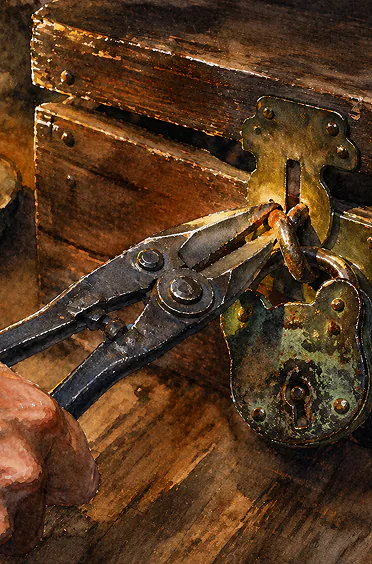
The name "Biting Through" evokes the image of a jaw clamping down on something that obstructs the mouth from closing. In career terms, this obstruction is whatever prevents a team, project, or organization from achieving unity of purpose. The Judgment states plainly: "Whenever unity cannot be established, the obstruction is due to a talebearer and traitor who is interfering and blocking the way." In a modern workplace, this "talebearer" may not be a literal traitor but rather any person, process, or pattern that systematically undermines collective effort—gossip that erodes trust, a manager who plays favorites, or a policy that incentivizes competition over collaboration.
The trigram structure of Hexagram 21 offers a powerful framework for action. The lower trigram, Zhen (Thunder), represents excitement, movement, and the capacity to shake things up. The upper trigram, Li (Fire), represents clarity, illumination, and discerning judgment. Together, they suggest that before you act, you must see clearly; and after you see, you must not hesitate. The I Ching warns against acting on unqualified excitement alone, which would be too violent, or relying on clarity without action, which would be too weak. The successful approach combines both: the lightning flash of insight followed by the thunderclap of decisive intervention.
The Image commentary deepens this by connecting Biting Through to legal and penal systems: "Penalties are the individual applications of the law... The only way to strengthen the law is to make it clear and to make penalties certain and swift." In a career context, this translates to establishing clear expectations and consequences, then applying them consistently. When a team member knows that certain behaviors will reliably be addressed, the entire system becomes more stable. The goal is not punishment as an end, but the restoration of order and trust. Hexagram 21 teaches that sometimes the most compassionate act is to remove what is harming the whole.
How Biting Through Shows Up in Real Career & Work Situations
Consider a common scenario: You lead a team where one member consistently misses deadlines, but their work is otherwise excellent. You've had multiple gentle conversations, offered support, and adjusted timelines. Yet the pattern continues, and other team members are becoming resentful. They feel that rules apply unevenly, and morale begins to fray. This is precisely the kind of obstruction Hexagram 21 addresses. The obstacle is not the missed deadlines themselves but the unspoken message that accountability does not apply to everyone equally. The longer this goes unaddressed, the more unity erodes.
Another recognizable pattern involves organizational change. Perhaps a new policy or restructuring has been announced, and a small but vocal group actively undermines its implementation. They spread doubt, withhold cooperation, or quietly work against the new direction. Leaders often respond by trying to win everyone over through persuasion, but Hexagram 21 suggests that when obstruction is deliberate and persistent, energetic measures are required. This does not mean firing people—it may mean having a direct conversation that names the behavior, setting clear expectations for compliance, and following through with consequences if the obstruction continues.
A third pattern is more personal: You may be the one who needs to "bite through" a professional situation that no longer serves you. Perhaps you've stayed in a role where your contributions are systematically undervalued, or you've tolerated a toxic dynamic with a boss or peer. The I Ching calls this a "talebearer and traitor" blocking the way to union—in this case, union with your own professional integrity and purpose. Biting Through here might mean having a difficult conversation, setting a firm boundary, or making the decision to leave. The clarity of Fire helps you see the truth of your situation; the excitement of Thunder gives you the energy to act.
Takeaway: Hexagram 21 reveals that when obstruction is deliberate and persistent, waiting only deepens the damage. The path to union requires clear seeing followed by decisive action—neither impulsive aggression nor passive patience.
From Reading to Action — Applying Biting Through
Applying the wisdom of Hexagram 21 requires moving from recognition to concrete steps. The six moving lines offer a nuanced guide, showing that not every situation calls for the same intensity of response. The key is to match your action to the nature and severity of the obstruction.
Begin by practicing the clarity of Fire. Before you act, take time to see the situation with precision. What exactly is the obstruction? Is it a person's behavior, a flawed process, or a cultural norm? Who is responsible, and what is their motivation? The Image says that clarity prevails when "mild and severe penalties are clearly differentiated"—in career terms, this means distinguishing between minor infractions that merit a warning and serious violations that require formal intervention. Line 2 of Hexagram 21 warns against letting anger blur your judgment: "Indignation blots out finer sensibility." Even when you are right, acting from anger rather than clarity can undermine your effectiveness.
Next, consider your authority and position. Line 3 cautions against trying to enforce consequences when you lack the power to do so. If you are a frontline employee trying to discipline a senior colleague, or a new manager attempting to change entrenched practices without organizational backing, you may find that your efforts backfire. In such cases, Biting Through may mean building alliances, gathering evidence, and working through proper channels rather than acting alone. The line says that even when the attempt fails through no fault of your own, you remain "free of blame" if the action was required by the time—but it is wiser to recognize your position first.
When you do have the authority to act, Line 4 offers the ideal stance: "Be hard as metal and straight as an arrow." This means being firm in your resolve and clear in your communication, without deviating into personal vendettas or hidden agendas. The line promises that if you remain persevering and aware of the difficulties, you will attain good fortune. This is not about winning a power struggle; it is about restoring the conditions for healthy work.
Finally, Line 5—the ruling line of Hexagram 21—offers the most important guidance for leaders: "Be like yellow gold—true as gold and impartial as yellow, the color of the middle." This means acting from a place of centered fairness, not favoritism or revenge. The line reminds us that we naturally incline to leniency, but must make every effort to be impartial. The most effective leaders in Biting Through situations are those who combine gentleness of nature with firmness of conduct—they command respect not through harshness but through consistent, fair application of standards.
Takeaway: Effective action with Hexagram 21 requires matching your response to the situation: know your authority, control your anger, act with precision, and remain impartial. The goal is not punishment but the restoration of unity.
Practical Examples
Example 1: The Chronic Underperformer Who Blames Others
Situation: You manage a team member who consistently misses targets but deflects responsibility onto colleagues, processes, or unclear instructions. You've coached, documented, and escalated—yet the pattern continues, and the team is losing trust in your leadership.
How to read it through Hexagram 21: This is a case of deliberate obstruction, even if the person doesn't see themselves that way. The "talebearer" is the deflection itself, which blocks accountability and team unity. The lower trigram (Thunder) tells you that gentle measures have been tried; now is the time for decisive action. The upper trigram (Fire) demands that you clarify exactly what standards have been violated and what consequences will follow.
Next step: Schedule a formal meeting with clear documentation of missed expectations. State plainly: "This pattern cannot continue. Here is what must change, and here is what will happen if it does not." Follow through consistently. Line 5's counsel to be "yellow gold" means applying the same standard you would apply to anyone else in the same role.
Example 2: A Colleague Who Undermines Your Work
Situation: A peer regularly criticizes your projects in meetings, takes credit for your ideas, or spreads subtle doubts about your competence. You've tried addressing it indirectly, but the behavior continues.
How to read it through Hexagram 21: The obstruction is this person's behavior, which prevents genuine collaboration and damages your professional reputation. Line 1 of the hexagram suggests that early intervention with mild consequences can prevent escalation. You have waited, and the behavior has become entrenched. Now you must "bite through" more firmly.
Next step: Have a direct, private conversation. Name the specific behavior: "In Tuesday's meeting, you said my proposal was impractical without checking the data first. I need us to address disagreements directly, not through public criticism." If the behavior continues, escalate to your manager with documentation. The goal is not to punish but to remove the obstruction to healthy working relationship.
Example 3: A Toxic Organizational Norm
Situation: Your company has an unspoken rule that no one questions senior leadership, even when decisions are clearly flawed. You see this pattern causing project failures and low morale, but speaking up feels risky.
How to read it through Hexagram 21: The obstruction is a cultural pattern that blocks honest communication and adaptive learning. This is the most difficult form of Biting Through because the obstruction is systemic, not personal. Line 3 warns against acting without authority—if you are not in a position to change culture single-handedly, you need allies.
Next step: Identify others who see the same problem. Build a coalition of people who share your concern. Present data about the costs of the current pattern to someone with authority to act. Frame your concern as a business issue, not a personal complaint. If change is impossible, Line 6—the "incorrigible" line—may indicate that the organization is deaf to warnings, and your best course is to leave.
Takeaway: Whether the obstruction is personal, interpersonal, or systemic, Hexagram 21 calls for clear diagnosis and appropriate action. The specifics differ, but the principle is the same: name the obstruction, gather your resources, and act with both clarity and force.
Common Mistakes
• Mistaking Biting Through for permission to be aggressive or punitive. The hexagram emphasizes the "just measure"—combining clarity with excitement, gentleness with firmness. Acting from anger or ego violates its deepest teaching.
• Applying the hexagram's advice too quickly, before you have truly seen the situation. The Fire trigram (clarity) comes first; without it, Thunder (excitement) is just noise. Take time to understand the nature and source of the obstruction.
• Assuming that Biting Through always means confronting another person. Sometimes the obstruction is internal—a limiting belief, a fear of conflict, or a refusal to acknowledge your own complicity in an unhealthy dynamic. The "talebearer" may be within.
• Ignoring the hexagram's warnings about timing and authority. Lines 1 and 6 show that early intervention is mild and effective, while late intervention is harsh and futile. Acting too soon or without proper standing can make things worse.
Frequently Asked Questions
What does Hexagram 21 mean for my career?
Hexagram 21 indicates that there is a specific obstruction preventing progress or unity in your professional life. It calls for clear diagnosis and decisive action—not aggression, but the courage to address what others avoid. Success comes from combining clear perception with firm, fair intervention.
How do I know if I should use Hexagram 21's advice or wait?
The Judgment says that deliberate obstruction "does not vanish of its own accord." If you have already tried patience, communication, and gentle measures without result, the time for Biting Through has come. Trust your accumulated experience of what has not worked.
Is Biting Through always about conflict with others?
No. The obstruction can be internal—a habit, fear, or pattern of avoidance that blocks your professional growth. In this case, Biting Through means confronting yourself with the same clarity and decisiveness you would apply to an external problem.
What if I lack the authority to enforce consequences?
Line 3 of Hexagram 21 addresses this directly. It suggests that acting without authority can put you in a humiliating position. In such cases, focus on building alliances, gathering evidence, and working through those who do have authority. If that is impossible, consider whether the situation requires you to leave.
Can Biting Through ever be the wrong approach?
Yes. The hexagram is specifically for situations of deliberate obstruction. If the problem is misunderstanding, lack of resources, or honest mistakes, Biting Through would be too harsh. Always check: Is the obstruction intentional and persistent? If not, a different hexagram's wisdom may apply.
Closing Reflection
Hexagram 21 reminds us that in professional life, as in all relationships, unity is not a given—it must be protected. When an obstruction arises that threatens the health of the whole, the most compassionate response is not to look away but to act with clear eyes and steady hands. The I Ching does not promise that Biting Through will be comfortable; it promises that it will be successful if done rightly. As you move forward, let the image of lightning and thunder guide you: see with perfect clarity what must be addressed, then move with the force of conviction. The obstacle will yield, and what was blocked will flow again.
Turn this guide into your own reading
After reading the explanation, cast with a real question. We will carry your question into the reading flow so the result can be interpreted and saved.
Sources & References
Zhouyi / I Ching primary text
The received text of the Book of Changes, including the Judgment, Image, and line statements.
The I Ching or Book of Changes, Richard Wilhelm / Cary F. Baynes
Princeton University Press translation used as a major English-language reference point for names, structure, and commentary framing.
The Sacred Books of China: The Texts of Confucianism, James Legge
Classical English reference used for comparative reading of source terminology and commentarial tradition.
The Classic of Changes, Richard John Lynn
Modern scholarly translation consulted for comparative interpretation and editorial cross-checking.
Related Hexagrams
Continue from this guide into specific hexagram study.
Related Guides
Continue with adjacent guides for more context and deeper study.