
Hexagram Career
Hexagram 20 (Contemplation [View]) in Career: I Ching Guidance for Work and Professional Life
What does Hexagram 20 (Contemplation [View]) mean for your career? The sacrificial ritual in China began with an ablution and a libation by which the Deity was invoked, after which the sacrifice was offered. The moment of time... Learn how the I Ching guides professional decisions, leadership, timing, and workplace dynamics.
Hexagram 20 (Contemplation [View]) in Career: I Ching Guidance for Work and Professional Life
You've been watching the dynamics at your workplace for months now. The team meetings where decisions are made before anyone speaks. The new initiative that everyone praises publicly but quietly resists. The promotion that went to someone who seems to spend more time managing perceptions than producing results. Something feels off, but you can't quite name it. You sense that the real story lies beneath the surface—in unspoken tensions, hidden agendas, and patterns that repeat themselves week after week. You're not looking for a quick fix or a career hack. You're looking for clarity, for the ability to see what's actually happening so you can respond wisely rather than react impulsively.
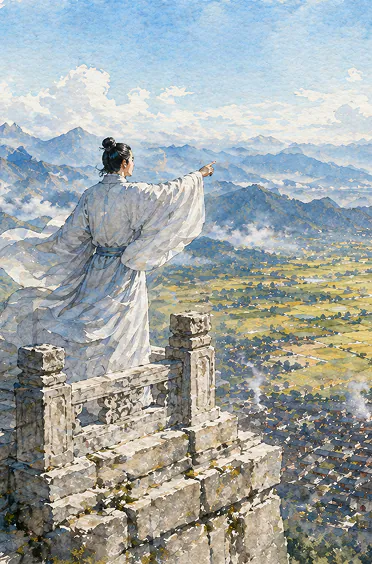
This is precisely the territory of Hexagram 20: Contemplation [View]. In the classical I Ching, this hexagram describes the moment of deepest inner concentration between the ablution and the sacrifice—the sacred pause when nothing happens outwardly, yet everything significant is being prepared. The Judgment tells us that when piety is sincere and expressive of real faith, the contemplation of it has a transforming effect on those who witness it. Structurally, Hexagram 20 is composed of Wind above and Earth below—Wind moving over the Earth, seeing far and wide, while the Earth receives that influence and bends to it like grass before the wind. This is not a hexagram about doing. It is about seeing with such depth and clarity that your very presence becomes a force of influence.
In your career, Contemplation [View] speaks to those times when action must be suspended in favor of observation, when influence flows not from what you say or do but from who you are and what you perceive. If you've been feeling stuck between the urge to intervene and the intuition that you need to wait and watch, this guide will help you understand what this hexagram reveals about your professional situation—and how to move forward without forcing outcomes.
Where This Guide Is Most Useful
• When you sense that office politics or organizational dynamics are more complex than they appear, and you need to understand the underlying patterns before you act. You've tried direct approaches and they've backfired. Now you need the contemplative distance that Hexagram 20 provides.
• When you are in a position of influence—or aspiring to one—and want to lead through presence rather than through pushing, persuading, or politicking. You've noticed that the most effective leaders in your field seem to exert a quiet authority that others naturally follow. This hexagram shows how that quality develops.
• When you feel pressure to "do something" but your intuition tells you that the most powerful move right now is to observe, reflect, and allow a situation to reveal itself. Your colleagues are rushing to solutions, but you suspect that the real problem hasn't been named yet. Contemplation [View] validates that patient attention.
Understanding Contemplation [View] in Career & Work Context
The Judgment of Hexagram 20 describes a ritual sequence: the ablution, then the libation, and between them a sacred moment of concentration. In career terms, think of this as the pause between gathering information and making a decision, between hearing a proposal and responding to it, between observing a problem and intervening. The power of this hexagram lies not in the action that follows, but in the quality of attention during that pause. When your contemplation is sincere—when you are truly present to what is happening rather than rehearsing your response—it transforms those who witness it. Your calm, focused attention becomes a force that others can feel, even if they cannot name it.
The Image reinforces this: wind moving over the earth, seeing everything, while the grass bends. In your professional life, this describes two movements. First, you must develop the capacity to survey your environment thoroughly—to see the real sentiments of your colleagues, the unspoken rules of your organization, the hidden currents that shape decisions. Second, as you cultivate this depth of perception, you will naturally exert an influence on those around you. Not through manipulation or force, but through the sheer clarity of your presence. People respond to someone who truly sees them.
The trigram structure tells us more. Wind (Xun) above represents penetration, gentle influence, and the ability to enter into situations without force. Earth (Kun) below represents receptivity, groundedness, and the capacity to be shaped by what is true. Together, they suggest that effective contemplation requires both the penetrating vision of Wind and the receptive stability of Earth. You cannot see clearly if you are anxious, defensive, or attached to a particular outcome. You must be open, grounded, and willing to be moved by what you discover.
This is why Hexagram 20 is so challenging for ambitious professionals. We are trained to act, to produce, to make things happen. Contemplation [View] asks us to do the opposite: to pause, to receive, to allow understanding to deepen before we commit to any course of action. It asks us to trust that seeing clearly is itself a form of power—and that influence built on genuine perception will outlast influence built on force or cleverness.
The most powerful thing you can do in your career right now may be nothing at all—except to see more clearly than anyone else.
How Contemplation [View] Shows Up in Real Career & Work Situations
You might recognize Contemplation [View] in your work life when you find yourself in a role where others look to you for direction, yet you sense that your real contribution is not in what you say but in the quality of attention you bring. This often happens during organizational transitions—a merger, a leadership change, a restructuring—when everyone is anxious and looking for certainty. The person who can remain calm, observant, and grounded in that chaos exerts an almost gravitational pull. They don't need to announce their authority; it is felt.
Another common manifestation is the experience of being underestimated. You attend meetings where others talk over you or assume they know what you think. Rather than pushing back or trying to prove yourself, you simply watch. You notice who speaks and who doesn't, whose proposals get traction and whose are ignored, what arguments carry weight and what objections are dismissed. Over time, your understanding of the organization's true dynamics becomes deeper than anyone else's. When you finally do speak, your words carry disproportionate weight because they arise from genuine insight rather than from ego or ambition.
There is also a shadow side to this hexagram that appears in professional life. The Image warns that the ruler's journeys were meant to survey the realm and ensure that no existing usages escaped notice—and also to change unsuitable customs. Contemplation without action can become paralysis. Some professionals use "observation" as a cover for fear of commitment. They study situations endlessly, gather more data, wait for perfect clarity that never comes. Hexagram 20 is not an invitation to indefinite hesitation. It is a call to see deeply so that when you do act, your action is aligned with reality rather than with your fantasies about reality.
The lines of the hexagram offer further nuance. Line 1 speaks of contemplation from a distance, without comprehension. In career terms, this is the junior employee who sees that something is wrong but cannot articulate what. The text says this is acceptable for the masses but a disgrace for the superior person. If you are in a position of responsibility, you cannot afford superficial understanding. You must push past vague impressions to genuine comprehension. Line 2 warns against the narrow view—looking through a crack in the door, seeing only what relates to yourself. This is the manager who interprets every organizational change through the lens of personal threat or advantage. It is appropriate for a housewife, the text says, but harmful for someone in public life. In modern terms: if you are in a leadership role, you must transcend your own perspective.
True professional contemplation is not about gathering more data. It is about seeing what is already there with fresh eyes.
From Reading to Action: Applying Contemplation [View]
The transition from contemplation to action is subtle but crucial. Hexagram 20 does not tell you to remain a passive observer forever. It tells you to observe so deeply that your action, when it comes, is almost effortless—like wind moving over the earth, natural and inevitable. Here are practical steps grounded in the hexagram's lines.
Begin with self-contemplation, as described in Line 3. This is the place of transition, where you stop looking outward and turn your attention inward—not to indulge in self-analysis, but to examine the effects you are producing. Ask yourself: What impact am I actually having on my team, my organization, my clients? Not what impact I intend to have, but what impact is actually occurring. This requires brutal honesty. If your influence is not what you wish it were, the problem is not with others but with your way of being. The text says that only the effects our lives produce give us the right to judge whether we are progressing or regressing.
Next, consider Line 4, which describes someone who understands the secrets by which an organization can flourish. This person must be given an authoritative position and allowed to act independently—treated as a guest, not a tool. If this is your situation, you may need to recognize that your value lies in your outsider perspective. You have been brought in because you see things that insiders cannot see. Do not allow yourself to be absorbed into the organization's blind spots. Maintain your contemplative distance even as you engage. If you are the one seeking such a person, look for someone who is not desperate for approval, who can tell you uncomfortable truths, and who does not need to be managed.
Line 5 speaks to those in positions of authority. The correct self-examination is not brooding over your own worthiness but examining the effects you produce. If your influence on others is good, you can be satisfied. If it is not, no amount of self-affirmation will help. This is a practical, almost clinical approach to leadership. Do not ask "Am I a good leader?" Ask "What is actually happening to the people I lead? Are they growing? Are they confident? Are they producing good work?" The answers will tell you everything.
Finally, Line 6 describes the sage who stands outside the affairs of the world, liberated from ego, contemplating the laws of life. In career terms, this is the person who has achieved such clarity that they are no longer caught in the dramas of organizational life. They see the patterns that repeat across companies and industries. They know that most problems are not unique. This perspective is the highest expression of Hexagram 20—not detachment from work, but freedom from the ego's entanglement in work. If you can reach this place, you will be invaluable to any organization, because you will see what no one else can see.
Self-contemplation is not about analyzing your feelings. It is about examining the effects you produce in the world.
Practical Examples
Example 1: The New Leader Who Needs to Earn Trust
Situation: You have been promoted to lead a team that is skeptical of outsiders. Your predecessor was beloved, and the team is wary of change. You feel pressure to prove yourself quickly, but every attempt to assert authority has been met with passive resistance.
How to read it: This is the classic Contemplation [View] scenario. The Judgment tells you that influence flows from sincere presence, not from action. Your task is not to prove yourself but to see clearly. Observe the team's dynamics without judgment. Notice who holds informal power, what values the group holds sacred, and where the real resistance lies. Your calm, attentive presence will be felt. The Image promises that the grass bends to the wind—not because the wind forces it, but because that is the nature of wind and grass.
Next step: For one month, do not try to change anything. Attend meetings, listen, ask questions that show genuine curiosity. Resist the urge to offer solutions or assert your vision. At the end of each week, write down three things you have learned about the team that you did not know before. When you finally do act, your actions will arise from understanding, not from anxiety.
Example 2: The Mid-Career Professional Feeling Stuck
Situation: You have been in your role for years and feel that you have plateaued. You are competent but not growing. Your attempts to get promoted have failed, and you are not sure why. You suspect that the problem is not your performance but something less tangible—visibility, relationships, or timing.
How to read it: Line 3 of Hexagram 20 speaks directly to you. You have been looking outward for answers—comparing yourself to others, studying the promotion criteria, networking more. But the text says you must turn your contemplation inward to examine the effects you produce. The question is not "What am I doing wrong?" but "What impact am I actually having on the people around me?" Perhaps you are competent but invisible. Perhaps you are reliable but not inspiring. Perhaps you solve problems but do not create opportunities.
Next step: Ask three trusted colleagues—one senior, one peer, one junior—to describe the effect you have on them. Do not defend or explain. Just listen. Compare their answers to your self-assessment. Where there is a gap, that is where your growth lies. Then, for the next quarter, focus not on getting promoted but on increasing the positive effects you have on others. Promotion may follow, but even if it does not, you will have become the kind of person who deserves it.
Example 3: The Consultant or Advisor Who Needs to Be Heard
Situation: You have been brought into an organization to provide expert guidance, but your recommendations are being ignored or watered down. The client says they value your input, but decisions are made without your involvement. You feel like a decoration rather than a true advisor.
How to read it: Line 4 describes your situation exactly. You have the understanding that could help the organization flourish, but you are being treated as a tool rather than a guest. The text says you must be given an authoritative position and allowed to act independently. If you are not, your influence will be limited. This is not about ego—it is about the structural conditions necessary for genuine contribution.
Next step: Have a direct conversation with your client about the conditions for your effectiveness. Explain that your best work requires access to decision-making, not just information-sharing. If they cannot provide that, you may need to reconsider the engagement. Alternatively, shift your approach: instead of delivering recommendations and stepping back, embed yourself in their process. Attend their internal meetings. Build relationships with the people who will implement your ideas. Become part of the organization's fabric rather than an outside voice. This is the wind moving over the earth—penetrating, persistent, and ultimately transformative.
Common Mistakes
• Confusing contemplation with inaction. The most common misinterpretation of Hexagram 20 is that it recommends permanent passivity. It does not. The hexagram describes a sacred pause, but the pause is preparatory. The ritual continues after the moment of concentration. If you use this hexagram to justify endless observation without ever acting, you are misreading it.
• Thinking that seeing clearly means you must act immediately. The opposite mistake is also common. You have a flash of insight and feel compelled to share it or act on it right away. But genuine understanding often requires time to settle. The Image shows wind moving over the earth—a process, not an event. Let your insights mature before you express them.
• Using self-contemplation as an excuse for self-absorption. Line 3 warns that self-contemplation is not about preoccupation with your own thoughts. It is about concern for the effects you produce. Endless introspection about your feelings, your worthiness, or your past does not constitute the kind of contemplation this hexagram recommends. The focus must be outward: What is actually happening because of you?
• Assuming that influence must be visible to be real. The Judgment describes a hidden spiritual power that emanates from the person of deep concentration, influencing others without their awareness. In our metrics-obsessed professional culture, we want to see results immediately. But some of the most powerful influences in organizations are invisible—the calm that spreads from a centered leader, the clarity that comes from a well-framed question, the trust that builds from consistent presence. Do not discount what you cannot measure.
Frequently Asked Questions
How is Hexagram 20 different from Hexagram 57 (The Gentle, Wind)?
Both involve Wind, but the focus is different. Hexagram 57 is about gentle penetration—the process of entering a situation subtly and persistently. Hexagram 20 is about seeing and being seen—the dynamic of observation and influence. In 57, you are the wind entering. In 20, you are the wind moving over the earth, surveying and being felt. One is about approach, the other about perception.
Can Contemplation [View] apply to job searching?
Absolutely. If you are job searching, this hexagram advises you to observe the organizations you are considering with the same depth you would bring to a professional engagement. Do not just study the job description. Study the culture, the leadership, the unspoken norms. Attend interviews with the intention of understanding, not just impressing. The right role will reveal itself to someone who sees clearly.
What if I am in a toxic work environment? Should I just observe?
No. Hexagram 20 is not a prescription for enduring harm. The hexagram assumes a context where influence is possible and where the observer has some agency. If you are in a genuinely toxic environment—where you are being mistreated, exploited, or abused—observation alone is not sufficient. The hexagram's advice about self-contemplation includes examining the effects your environment is having on you. If those effects are destructive, the appropriate action may be to leave.
How do I know when my contemplation is complete and it's time to act?
The hexagram does not give a timeline, but it offers a criterion: when your understanding has become so clear that action arises naturally, without forcing. You will know you are ready when you can see the situation whole—when you understand not just the surface dynamics but the underlying patterns. At that point, action will feel less like a choice and more like an inevitability.
Is this hexagram only for leaders and managers?
No. While the hexagram speaks often to those in positions of influence, its principles apply at every level. A junior employee who observes with genuine attention will understand their organization better than those who have been there for years. A freelancer who contemplates their clients' needs deeply will serve them better than one who simply executes tasks. Contemplation [View] is available to anyone willing to pause and see.
Closing Reflection
The gift of Hexagram 20 is the permission to stop performing and start perceiving. In a professional culture that rewards speed, visibility, and constant action, this hexagram reminds you that the deepest influence is often invisible—the quiet authority of someone who has taken the time to see clearly. As you move through your career, you will face countless situations that demand a response. Before you respond, pause. Let your attention settle. See what is actually there, not what you fear or hope or assume. From that seeing, right action will emerge. The wind does not struggle to move the grass. It simply moves, and the grass bends.
Turn this guide into your own reading
After reading the explanation, cast with a real question. We will carry your question into the reading flow so the result can be interpreted and saved.
Sources & References
Zhouyi / I Ching primary text
The received text of the Book of Changes, including the Judgment, Image, and line statements.
The I Ching or Book of Changes, Richard Wilhelm / Cary F. Baynes
Princeton University Press translation used as a major English-language reference point for names, structure, and commentary framing.
The Sacred Books of China: The Texts of Confucianism, James Legge
Classical English reference used for comparative reading of source terminology and commentarial tradition.
The Classic of Changes, Richard John Lynn
Modern scholarly translation consulted for comparative interpretation and editorial cross-checking.
Related Hexagrams
Continue from this guide into specific hexagram study.
Related Guides
Continue with adjacent guides for more context and deeper study.