
Hexagram Health
Hexagram 11 (Peace) in Health: I Ching Guidance for Wellbeing and Vitality
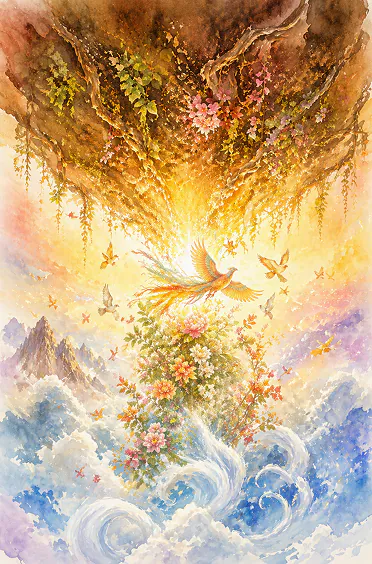
What does Hexagram 11 (Peace) suggest about health and wellbeing? This hexagram denotes a time in nature when heaven seems to be on earth. Heaven has placed itself beneath the earth, and so their powers unite in deep harmony.... Explore how the I Ching frames the balance of energy, rest, and renewal.
Hexagram 11 (Peace) in Health: I Ching Guidance for Wellbeing and Vitality
You wake up one morning and notice something has shifted. The chronic tightness in your shoulders has loosened. Your digestion feels settled. The low-grade anxiety that usually greets the dawn is quiet. You don’t know why, but you feel whole—as if your body, mind, and spirit are finally on speaking terms. If you’ve ever experienced this kind of spontaneous wellbeing, you know how precious it is. And if you’ve wondered how to cultivate more of it, you’ve come to the right place.
In the ancient Chinese wisdom of the I Ching, this state of integrated vitality is named Peace (Hexagram 11). Its structure is remarkable: Heaven (the creative, yang principle) sits beneath Earth (the receptive, yin principle). This is an inversion of the usual order—Heaven is normally above—but here the trigrams touch, their energies mingle, and harmony results. The Judgment tells us that “the light has a powerful influence, while the dark is submissive,” and that “each receives its due.” In health terms, this is the moment when your body’s wisdom leads, your mind follows, and your spirit breathes freely.
If you’ve been struggling with a health challenge, feeling fragmented, or simply wanting to deepen your vitality, Hexagram 11 offers a map. It doesn’t promise quick fixes. Instead, it shows you what genuine wellbeing looks like when all parts of you are in right relationship. This article will help you recognize Peace when it appears in your life, understand what sustains it, and learn how to act wisely when the harmony begins to shift.
Where This Guide Is Most Useful
• You’re recovering from illness or injury and want to rebuild your health from a place of integration, not just symptom management. The Peace hexagram describes a time when the “light principle” (your innate healing capacity) occupies the center, and the “dark principle” (illness or imbalance) is on the outside, gradually transforming. This is the ideal framework for convalescence.
• You feel fragmented—your mind wants one thing, your body another, and your emotions are in rebellion. Peace shows what it looks like when your inner “heaven” and “earth” unite. If you’re tired of the civil war inside yourself, this hexagram reveals how to restore cooperation.
• You’ve achieved a period of stable health but sense the subtle danger of complacency. The Image warns that “this stream of energy must be regulated.” Peace is not permanent stasis; it’s a dynamic equilibrium that requires mindful stewardship. This guide will help you recognize the early signs of imbalance before they become problems.
Understanding Peace in Health & Wellbeing Context
The Judgment of Hexagram 11 opens with a striking image: “Heaven seems to be on earth.” In health terms, think of heaven as your vital spirit—your enthusiasm, creativity, and sense of purpose. Earth is your physical body—your cells, organs, and biological rhythms. When heaven is beneath earth, the two are in direct contact. Your spirit doesn’t float above your body, disconnected and frustrated. It sinks down, inhabits your flesh, and animates it fully. This is the felt experience of vitality: you’re not just alive; you’re living.
The trigram structure reinforces this. Upper trigram Kun (Earth) is receptive, nurturing, and encompassing. Lower trigram Qian (Heaven) is creative, dynamic, and initiating. Normally we think of health as something we do—we exercise, eat well, take supplements. That’s the Heaven energy. But Peace reminds us that true wellbeing also requires Earth energy: rest, receptivity, trust in the body’s innate intelligence. When these two work together, health becomes a collaboration rather than a battle. The Judgment says, “their powers unite in deep harmony.” In your body, this might feel like effortless digestion, restorative sleep, or the quiet joy of a morning stretch.
The Image adds another layer: “Heaven and earth are in contact and combine their influences, producing a time of universal flowering and prosperity.” But notice what follows: “This stream of energy must be regulated by the ruler of men. It is done by a process of division.” The ancient text is saying that even in times of abundant health, we need structure. We divide the flow of time into seasons, space into directions. In your life, this means honoring your body’s natural rhythms—eating when hungry, sleeping when tired, moving when restless. Peace is not a chaotic free-for-all. It’s a garden, not a jungle. The ruler (your conscious awareness) must tend it.
The takeaway: Peace in health is not the absence of all problems. It’s the condition where your spirit and body cooperate, your vitality flows freely, and you have the wisdom to regulate that flow without stifling it.
How Peace Shows Up in Real Health & Wellbeing Situations
Imagine you’ve been under chronic stress for months. Your sleep is poor, your digestion is erratic, and you catch every cold that goes around. Then, for reasons you can’t fully explain, the pressure lifts. Perhaps a project ends, or a relationship improves, or you simply decide to rest. Within days, your body recalibrates. You sleep deeply. Your appetite returns. You feel a quiet, grounded energy. This is Peace arriving. Hexagram 11 describes this as “the small, weak, and evil elements are about to take their departure, while the great, strong, and good elements are moving up.” The “small elements” might be your stress hormones, your inflammation, your anxious thoughts. The “great elements” are your healing capacity, your immune system, your inner calm.
But Peace also has a shadow side. The Judgment warns that “when the spirit of heaven rules in man, his animal nature also comes under its influence and takes its appropriate place.” This is subtle. When you feel healthy, you might be tempted to overdo it—to push harder, to ignore early warning signs, to assume the good times will last forever. The third line of the hexagram addresses this directly: “Everything on earth is subject to change. Prosperity is followed by decline: this is the eternal law on earth. Evil can indeed be held in check but not permanently abolished. It always returns.” This is not pessimism; it’s realism. Peace doesn’t mean you’ll never get sick again. It means that right now, your system is in a state of optimal function. The wise response is gratitude, not hubris.
In practice, Peace shows up as a feeling of “enoughness.” You don’t need to fix anything. You don’t need to optimize. You can simply be in your body. This is radically different from the hyper-vigilant health optimization culture that tells you to track every biomarker and chase every biohack. Peace says: the harmony is already here. Your job is to maintain it, not manufacture it. The fourth line says that people “of high rank come in close contact with the lowly quite simply and without boasting of their wealth.” In your health, this means your conscious mind (the “high rank”) approaches your body (the “lowly”) with humility and respect, not domination.
The takeaway: Peace in real life feels like effortless vitality, a quiet confidence in your body’s wisdom, and the humility to know that this state is a gift to be stewarded, not a possession to be clung to.
From Reading to Action — Applying Peace
Recognizing Peace is one thing; living it is another. The moving lines of Hexagram 11 offer practical guidance for different situations you might encounter on your health journey.
First line: “In times of prosperity every able man called to fill an office draws like-minded people along with him.” When you’re in a period of good health, don’t isolate. Share your vitality. This might mean cooking nourishing meals with loved ones, joining a walking group, or simply bringing your grounded presence to stressful situations. Your health is not just for you; it radiates outward. The line compares this to pulling up ribbon grass—the roots are connected. Your wellbeing is connected to the wellbeing of those around you.
Second line: “In times of prosperity it is important above all to possess enough greatness of soul to bear with imperfect people.” This is a profound health insight. When you feel good, you may be tempted to judge those who don’t—to see their illness as weakness or their struggles as failure. The I Ching says: don’t. Instead, cultivate generosity. This doesn’t mean enabling unhealthy behavior. It means recognizing that every body has its own timing and its own path. Your health is not a moral achievement. The line also warns against “factionalism”—in health terms, don’t become dogmatic about your particular approach (keto, meditation, CrossFit) and dismiss others. Stay open.
Third line: “If we continue mindful of the danger, we remain persevering and make no mistakes.” This is the most important line for sustaining health. When you feel good, remember that change is the only constant. This isn’t anxious vigilance; it’s wise awareness. Check in with your body daily. Notice when the first whisper of imbalance appears—a slight headache, a dip in energy, a touch of irritability. Address it early, before it becomes a crisis. The line says, “As long as a man’s inner nature remains stronger and richer than anything offered by external fortune, fortune will not desert him.” Your inner nature—your core vitality—is deeper than any passing symptom.
Fifth line: “A truly modest union of high and low that brings happiness and blessings.” This line uses the example of a princess who, though higher in rank, obeys her husband. In health terms, this is the integration of your conscious will with your body’s innate wisdom. You might have a plan to exercise, but your body says rest. Which do you obey? The Peace hexagram says: honor the body. Not because it’s weak, but because true power comes from alignment, not domination.
The takeaway: To apply Peace, share your vitality generously, stay humble about your health practices, remain mindful of subtle imbalances, and let your body’s wisdom guide your actions.
Practical Examples
Example 1: The Recovering Perfectionist
Situation: Maria, 42, has spent years trying to “fix” her health. She’s tried every diet, every supplement, every morning routine. She’s exhausted. Recently, she stopped all of it and just started eating intuitively and moving gently. Her digestion improved. Her sleep deepened. She feels, for the first time in a decade, peaceful in her body.
How to read it: This is Hexagram 11 in action. Maria’s “heaven” (her striving, controlling mind) has finally placed itself beneath her “earth” (her body’s natural intelligence). The Judgment says, “the light has a powerful influence, while the dark is submissive.” Her light (conscious effort) is now serving her body, not fighting it.
Next step: Maria should continue this approach but add the second line’s wisdom: “bear with imperfect people.” She will encounter friends who still believe in aggressive health optimization. She doesn’t need to convert them. She simply continues her own practice with quiet confidence.
Example 2: The Caregiver’s Respite
Situation: James has been caring for his aging mother for two years. His own health has deteriorated—poor sleep, weight gain, chronic fatigue. Suddenly, his sister arranges for a month of professional care. James has time to himself. Within two weeks, his energy returns. He starts walking again. He feels like himself.
How to read it: The first line of Hexagram 11 says, “In times of prosperity every able man called to fill an office draws like-minded people along with him.” James’s prosperity is his regained health. He shouldn’t hoard it. He should use this time to reconnect with friends, join a support group for caregivers, and build a sustainable system for the future.
Next step: James should not return to the same unsustainable pattern. The third line warns that “prosperity is followed by decline.” He must use this respite to create new boundaries and routines that protect his health long-term. He might hire regular respite care, even if his sister can’t always provide it.
Example 3: The Chronic Condition in Remission
Situation: Leah has had autoimmune arthritis for seven years. She’s been in remission for three months, and she’s terrified it won’t last. She’s tempted to push herself hard to “make up for lost time,” but she also feels a deep need to rest.
How to read it: This is the tension of Hexagram 11’s third line: “Everything on earth is subject to change… If we continue mindful of the danger, we remain persevering.” Leah’s fear is understandable, but the hexagram advises against both denial and panic. She should neither pretend the remission will last forever nor live in dread of relapse.
Next step: Leah should follow the fifth line’s example of “modest union.” She can gently increase her activity, but only while staying in close communication with her body. She might set a rule: “I can do one new thing per week, and if my body protests, I stop without guilt.” This honors both her desire for vitality and her need for protection.
The takeaway: Whether you’re recovering from burnout, caring for others, or managing a chronic condition, Peace teaches you to recognize harmony when it arrives, share it generously, and steward it with humility.
Common Mistakes
• Mistaking Peace for permanent immunity. The third line explicitly states that “evil can indeed be held in check but not permanently abolished.” Some readers interpret Hexagram 11 as a promise of perpetual health. It’s not. It’s a description of a phase—a precious one, but not an eternal guarantee. The mistake is to become complacent and stop paying attention to early warning signs.
• Using Peace as a reason to push harder. The first and second lines both warn against this. “In times of prosperity,” you might think you can do more, take on more, ignore more. But the hexagram advises generosity and forbearance, not aggressive expansion. The Image says the energy “must be regulated.” Overdoing it in a time of health is a fast track to burnout.
• Believing you must achieve Peace through effort alone. The structure of the hexagram—Heaven beneath Earth—shows that true harmony comes when the active principle serves the receptive. Many health seekers try to force peace through discipline. But Peace is the result of alignment, not exertion. The Judgment says “the light has a powerful influence” precisely because it has stopped fighting the dark.
• Ignoring the social dimension of health. The Judgment describes a time of social harmony: “those in high places show favor to the lowly, and the lowly… are well disposed toward the highly placed.” In health, this means your wellbeing doesn’t exist in a vacuum. You need community. You need to share your vitality and receive support when you’re low. Isolating in your health journey misses the whole point of Peace.
Frequently Asked Questions
What does Hexagram 11 mean for my health specifically?
Hexagram 11 (Peace) indicates a time of integrated vitality. Your body, mind, and spirit are working together. The Judgment says “the light has a powerful influence”—your innate healing capacity is dominant. This is an excellent time for gentle maintenance, not aggressive intervention. Focus on sustaining the harmony you have.
Is Peace a permanent state in health?
No. The third line warns that “prosperity is followed by decline.” Peace is a phase, not a permanent condition. The wise response is to enjoy it fully, use it to build resilience, and remain mindful that change is inevitable. This isn’t pessimistic—it’s realistic and liberating.
How do I know if I’m in Peace or just in denial?
Peace feels grounded, expansive, and easeful. Denial feels tight, avoidant, and anxious. The Judgment says “the light has a powerful influence”—you feel clear, not foggy. If you’re ignoring symptoms out of fear, that’s not Peace. If you feel genuinely well and your body confirms it, that’s Peace.
Can I use Hexagram 11 to heal a specific illness?
The I Ching is not a medical diagnostic tool. Hexagram 11 describes the context for healing, not a specific cure. It suggests that when your system is in harmony, healing happens naturally. Focus on creating the conditions for Peace—rest, proper nutrition, stress reduction, and alignment with your body’s rhythms.
What should I do when Peace begins to fade?
The third line advises: “If we continue mindful of the danger, we remain persevering.” When you notice the first signs of imbalance, don’t panic and don’t ignore. Address the small issue before it becomes large. Rest, adjust your diet, seek support. The fifth line reminds you to “obey” your body’s wisdom with humility, not resistance.
Closing Reflection
Hexagram 11 teaches us that genuine health is not a fortress to be defended but a garden to be tended. When heaven and earth unite within you, vitality flows naturally—not because you’ve conquered all obstacles, but because you’ve aligned with the deeper rhythm of life. This alignment is both a gift and a responsibility. It asks you to receive your wellbeing with gratitude, to share it without arrogance, and to remain awake to the constant dance of change. The wall of the town may eventually sink back into the moat, as the sixth line warns, but that doesn’t diminish the beauty of the moment when heaven touches earth. In that touch, you are whole. And that wholeness, even for a season, is enough.
Turn this guide into your own reading
After reading the explanation, cast with a real question. We will carry your question into the reading flow so the result can be interpreted and saved.
Sources & References
Zhouyi / I Ching primary text
The received text of the Book of Changes, including the Judgment, Image, and line statements.
The I Ching or Book of Changes, Richard Wilhelm / Cary F. Baynes
Princeton University Press translation used as a major English-language reference point for names, structure, and commentary framing.
The Sacred Books of China: The Texts of Confucianism, James Legge
Classical English reference used for comparative reading of source terminology and commentarial tradition.
The Classic of Changes, Richard John Lynn
Modern scholarly translation consulted for comparative interpretation and editorial cross-checking.
Related Hexagrams
Continue from this guide into specific hexagram study.
Related Guides
Continue with adjacent guides for more context and deeper study.